What Does It Mean to Be Himachali Away from Himachal?
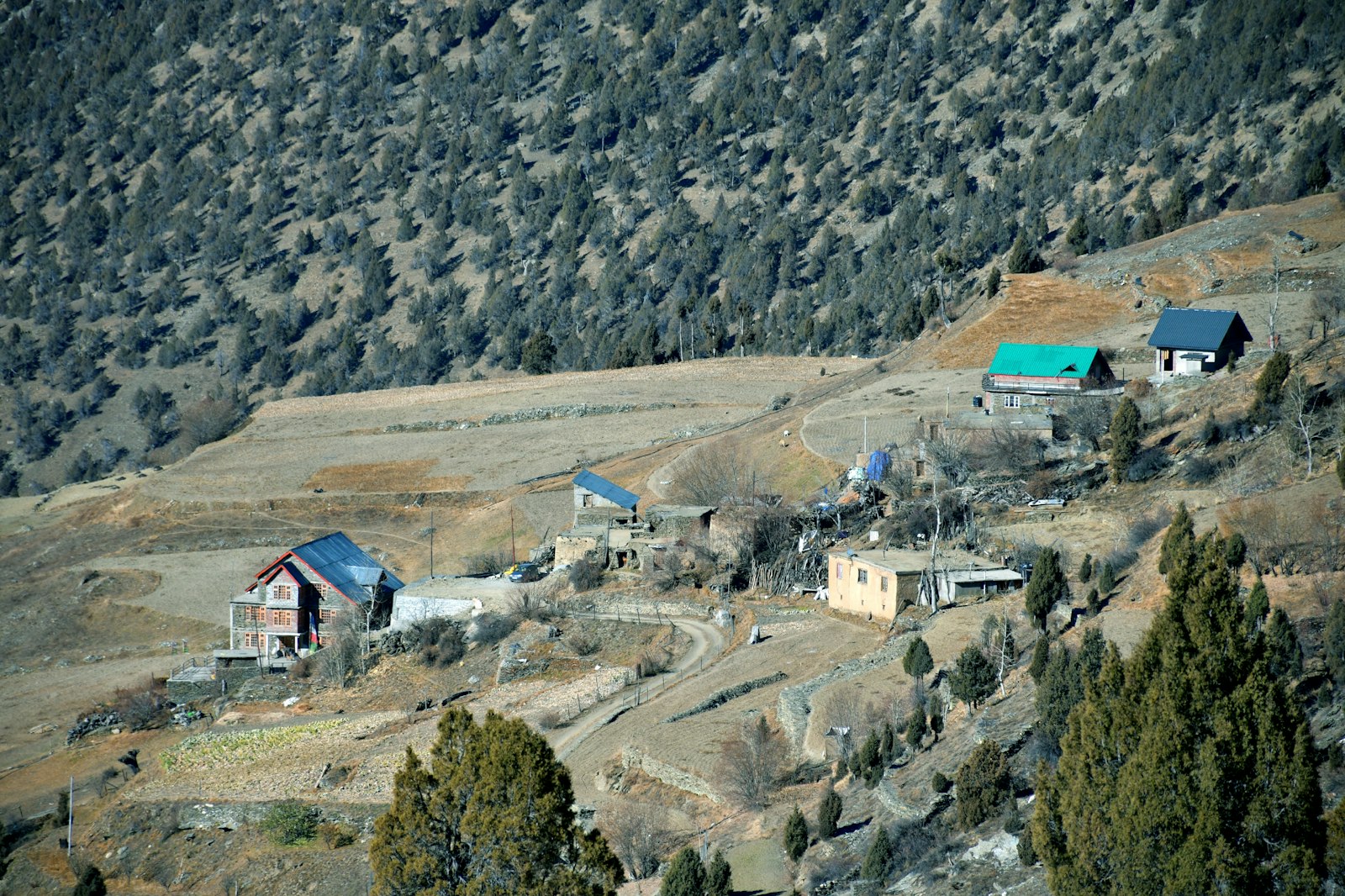
What Does It Mean to Be Himachali Away from Himachal?
Distance can make identity feel as though it needs to be proved. A person may be asked where they were born, whether they speak a particular language, how often they visit, or whether they know the “right” food, clothing, song, or ceremony. Those questions may begin in curiosity, but they can turn belonging into an examination.
Himachali identity away from Himachal is better understood as a layered relationship: with people and places, inherited and chosen memories, languages heard or learned, and practices carried into new circumstances. No single marker—birthplace, accent, fluency, dress, ritual knowledge, diet, property, or frequency of travel—can hold the whole relationship.
Key Takeaways
- Belonging is not a checklist. Being born outside Himachal, speaking with a different accent, or knowing only fragments of a family language does not by itself cancel a Himachali connection.
- Migration can change a relationship without severing it. People may leave for education, work, marriage, care, safety, or circumstances they did not choose; contact with home can continue, weaken, or be rebuilt over time.
- There is no single Himachali culture. Regional languages, ecologies, faiths, caste and tribal histories, occupations, and family practices differ across and within districts. One household’s custom is not a statewide test.
- Adaptation is part of living heritage. A dish made with available ingredients, a celebration shifted to a weekend, or a language mixed with Hindi or English can still carry meaning when the change is acknowledged and the practice’s origins are respected.
- Generations may carry different parts of the connection. First-generation memory and second-generation belonging are not rivals. Each can help the other understand what was preserved, what changed, and what remains possible.
- Reconnection can be gradual and accessible. Listening to a relative, learning local place names, recording a story with consent, or practising a few family words can matter even when travel, money, time, mobility, or family relationships are difficult.
Migration Does Not Necessarily Sever Home
Official data can describe movement, but it cannot award or withdraw identity. The Census of India’s Himachal Pradesh migration tables classify people by such measures as last residence, reason for migration, and duration of residence. Its place-of-birth tables offer another demographic view. Both datasets come from the 2011 Census, the latest completed Census—not a current count—and neither defines what it means to belong.
Lives also exceed a simple “left” or “stayed” divide. A 2026 mixed-methods study in Frontiers in Human Dynamics examined 486 households in nine Himachal Pradesh villages and found forms of temporary and circular mobility alongside continuing rural–urban links. Those findings belong to the study sites and should not be generalized to every migrant or district. They do, however, show why migration need not be imagined as a one-way cultural break.
Some people return often; others cannot. Some support relatives, follow village news, maintain friendships, or remain involved in family decisions from afar. Others experience estrangement, displacement, financial pressure, inaccessible travel, or a family history that is painful to revisit. Migration may be voluntary, constrained, or forced by circumstances. A generous account of identity leaves room for all of these realities. It does not assume an ancestral house, inherited land, close relatives, or an uncomplicated welcome.
Home itself can be plural. A person may feel attached to a village and to Chandigarh, Delhi, Bengaluru, Dubai, London, Toronto, or another place where daily life has taken root. Caring about a new home does not require disowning an older connection. Diaspora identity often grows in the space between places rather than choosing only one.
Himachal Is Plural Within Its Borders
“Himachali” is a useful shared identity, but it sits above many specific ones. Valleys separated by altitude and terrain have different speech forms, seasonal rhythms, cuisines, histories, and relationships to neighbouring regions. Practices also vary by religion, caste, tribe, occupation, gender, generation, and household. District names help orient us, but even a district is not culturally uniform.
Language makes this plurality especially clear. The official Linguistic Survey of India—Himachal Pradesh documents a multilingual state that includes speech from Indo-Aryan and Tibeto-Burman language families. “Pahari” is therefore not a safe label for every language in Himachal, particularly when discussing Kinnaur or Lahaul-Spiti. Readers wanting a starting point can consult the Journal’s overview of Pahari languages and its separate introduction to Kangri, while remembering that neither represents the entire state’s linguistic landscape.
The same care applies to cultural shorthand. No cap, dance, deity tradition, festival, food, dietary rule, or “Devbhoomi” framing speaks for everyone. Even a widely recognized ceremonial meal such as dham has regional forms and social histories; it should be approached as a set of situated traditions, not a purity test for families elsewhere.
District-sensitive identity begins with specific questions: Which town, village, valley, or neighbourhood shaped this family? Which language varieties did different relatives use, and with whom? Which practices belonged to a particular community or occasion? Saying “in our family” or “in this part of Mandi, Chamba, Kinnaur, or Sirmaur” is often more accurate than saying “all Himachalis do this.”
What Travels With People
Culture does not travel only in suitcases or ceremonial objects. It travels in ordinary habits: the name used for a grandparent, the rhythm of a bedtime story, a route described through landmarks, a way of hosting guests, a farming memory, a seasonal saying, or the decision to call home before an important event.
UNESCO’s account of oral traditions identifies stories, songs, proverbs, riddles, prayers, and other spoken forms as vehicles for knowledge, memory, and values. In diaspora, these forms may survive unevenly. A child may not understand every word of a song but may remember who sang it. A family recipe may be written in English because that is the shared language of the grandchildren. A place name may preserve a relationship even when no one can visit.
What travels can also include difficult memory: the strain of leaving, discrimination in a new city, gendered expectations, caste boundaries, or conflict within a family. Heritage need not be romanticized to be valued. Families can preserve affection and knowledge while questioning practices that caused harm. Honest memory is more durable than a polished story in which nothing ever changed.
Objects and occasions can provide anchors, but relationships give them context. A photograph becomes more useful when someone records who is pictured, where it was taken, and whether it may be shared. A recipe carries more than ingredients when its cook explains when the dish was made and how their version differs from another household’s. Asking before recording or publishing respects the people whose memories make an archive possible.
Change Is Part of Living Heritage
UNESCO describes intangible cultural heritage as something transmitted across generations and continually recreated in response to people’s environment, history, and social world. This framing does not make every new version identical to an older one. It recognizes that continuity has always involved selection and change.
Diaspora makes that process visible. Ingredients may be unavailable. Work schedules may move a gathering from its customary day. Flats may not accommodate a large meal. Families may use video calls, shared documents, or voice notes where knowledge once moved face to face. Young relatives may answer in Hindi or English while understanding parts of another language. These are conditions of transmission, not automatic evidence of cultural failure.
Respectful adaptation has three useful habits. First, name the origin as precisely as you can: a family, locality, community, or regional tradition rather than “the Himachali way.” Second, say what changed and why. Third, avoid claiming authority over people who practise it differently. A small gathering can be meaningful without being advertised as a complete recreation of a village ceremony.
“Authenticity” is most helpful when it encourages honesty, care, and context—not when it is used to exclude. There is a difference between adapting one’s inherited practice and borrowing a community’s sacred or restricted tradition without understanding or permission. Curiosity should be paired with listening, especially where a practice belongs to a specific religious, tribal, caste, or local setting.
First-Generation Memory and Second-Generation Belonging
First-generation migrants often carry detailed sensory and social memories: paths, weather, work, school, kinship networks, idioms, and the feel of particular occasions. Yet memory is not a complete map. Places change after people leave, and nostalgia can compress differences or preserve the norms of one period as though they were timeless.
Second-generation people may inherit connection without the same recall. They can feel Himachali through family life while also feeling hesitant around fluent speakers or relatives who grew up in the state. Their questions, mixed identities, and changed pronunciation are not signs of lesser seriousness. Belonging can precede fluency; learning can begin without pretending mastery.
The exchange works both ways. Elders can offer context without turning every mistake into a verdict. Younger relatives can ask why a practice matters rather than treating it as content to collect. Neither generation should be reduced to a role: elders may not want to narrate painful histories, and young people should not be required to perform cultural continuity for the family.
Useful conversations make room for disagreement. Two siblings may remember a migration differently. A grandparent’s name for a language may not match an official classification. One branch of a family may have maintained a practice that another stopped. Record those differences rather than forcing one final version. Plural memory is not failed memory.
Practical Ways to Build a Connection
Connection is easier to sustain when it is specific, modest, and repeatable. Choose what fits your access and relationships rather than attempting a complete cultural recovery at once.
- Draw a relationship map. Note people, places, languages, and practices connected to your family. Mark uncertainties as questions instead of filling them with assumptions.
- Start one consent-based conversation. Ask a relative or community elder about a journey, neighbourhood, workday, song, object, or meal. Explain whether you are taking notes or recording and who will be able to hear or read it.
- Learn place names carefully. Find the village, town, valley, district, and nearby landmarks relevant to the story. Ask how names are pronounced locally and whether older names are still used.
- Practise language without demanding perfection. Begin with greetings, kinship terms, household phrases, or a short song meaningful to your family. Listen before correcting others. Do not treat one variety as the standard for all Himachalis.
- Keep context with recipes and celebrations. Write down who taught a practice, where they learned it, when it was used, and how your present version has changed. The explanation is part of the heritage.
- Make participation accessible. Offer remote options, translations, smaller gatherings, and roles that do not depend on money, travel, cooking skill, religious participation, or public performance.
- Build reciprocity, not extraction. If people in Himachal share time or knowledge, ask what would be useful to them. Send recordings back, correct captions when requested, respect private material, and maintain the relationship after your immediate question is answered.
A roots visit can be valuable, but it is not the highest form of belonging. Travel may be unaffordable, physically difficult, unsafe, or emotionally unwise. Regular calls, language practice, careful reading, mutual aid, and attention to living communities can all sustain connection across distance.
Belonging as an Ongoing Relationship
To be Himachali away from Himachal is not to preserve a sealed cultural package. It is to remain in relationship—with particular people and places, with layered histories, and with practices that may be remembered, questioned, adapted, lost, or learned anew.
That relationship asks for humility rather than proof. First-generation migrants need not apologize for adaptation. Second-generation people need not pass a fluency or birthplace test before they begin. Families need not present their own tradition as the state’s only tradition. A useful next step is simply to choose one connection—a person to call, a word to learn, a place to locate, or a memory to record with consent—and give it sustained attention.
Frequently Asked Questions
Do I have to be born in Himachal Pradesh to be Himachali?
No single birthplace test can settle a lived identity. Birthplace is one demographic fact; family relationships, memory, participation, care, and continuing connection can also shape Himachali belonging.
Can second-generation people belong if they do not speak a Himachali language fluently?
Yes. Fluency can deepen connection, but it is not an entry requirement. Listening, learning family words, asking respectfully, and supporting speakers are meaningful forms of participation.
Does adapting a tradition away from Himachal make it inauthentic?
Not automatically. Living heritage changes as people transmit it. Honest adaptation respects a practice's local origins, explains what changed, and avoids presenting one family's version as universal.
Is there one Himachali culture that diaspora families should preserve?
No. Himachal contains many regional, linguistic, religious, caste, tribal, occupational, and family histories. Connection begins by learning the particular traditions and places relevant to your family without treating them as the whole state.
How can I reconnect with Himachal if I feel distant from it?
Begin gradually with one relationship or practice: call a relative, learn a place name, record a memory with consent, cook a family dish, hear a local language, or read about your family's region.