Himachali Dham
Himachali Dham
Overview
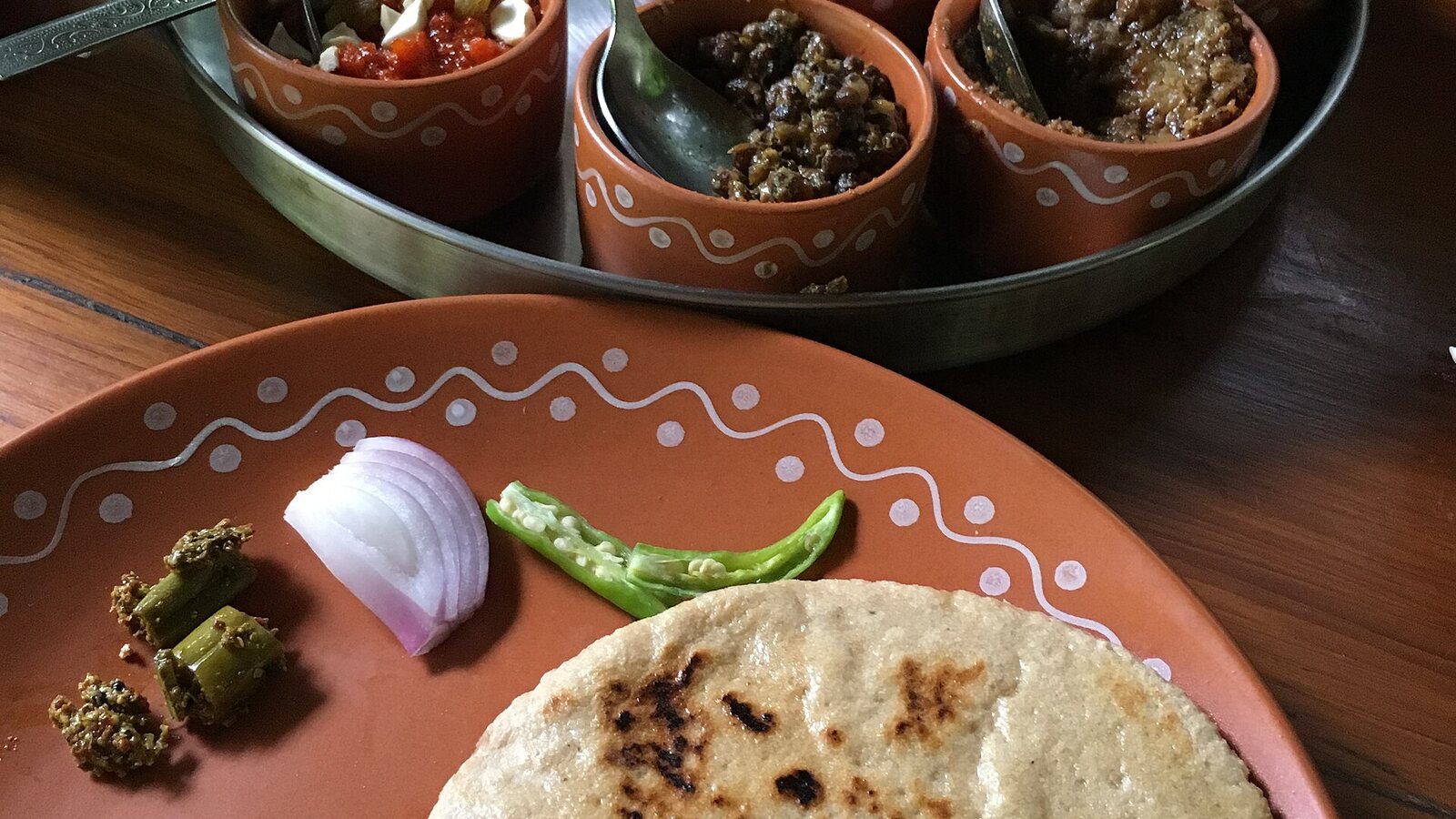
Ask anyone from Himachal Pradesh what they look forward to most at a wedding, a temple festival, or a village gathering, and the answer is almost always the same: dham. Dham is not a single dish but an entire ceremonial meal — a multi-course, strictly vegetarian feast that is cooked by hereditary Brahmin chefs, served on leaf plates to guests seated on the ground, and eaten in a prescribed sequence that has barely changed in centuries. It is the closest thing the state has to a signature cuisine, and for the Himachali diaspora it is the taste of home, celebration, and community rolled into one.
What sets dham apart from a standard festive meal is the rigour behind it. The cooking begins the night before, often in the open, over a wood-fired trench called a char or tiun. The cooks — known as botis — belong to a particular caste of hereditary Brahmin chefs who have prepared dham for generations, passing their craft down from father to son without written recipes. The meal is satwik: no onion, no garlic, no meat, no eggs. The vessels are brass — batohi, baltohi, or charoti — and the food is served on pattals, leaf plates made from the dried leaves of the sal, tour, or banyan tree. Guests sit cross-legged in rows called painth, and every dish arrives in its proper order.
Dham is served across the hill state, but each district has its own repertoire. A Kangra dham, a Chamba dham, and a Mandi dham are recognisably different in their star dishes, their gravies, and their sweets — yet they share the same structure, the same satwik discipline, and the same role as the centrepiece of any important occasion.
Background and Origin
A Thousand-Year-Old Legend
The origin story most commonly told — and recorded in publications from Whetstone Magazine to Condé Nast Traveller India — traces dham back roughly a thousand years to King Jaistambh (also spelled Jaisthambh) of Chamba. According to the legend, the king travelled to Kashmir and was served a wazwan — the legendary 36-course Kashmiri feast prepared by hereditary waza chefs. He returned to Chamba so taken with the experience that he asked his own cooks to create a comparable spread, but without meat. The result was a vegetarian feast built from what the hills could offer: lentils, dairy, spices, and the produce of the Chamba valley, which was then famous for its rajma, spices, and milk.
Whether or not the story is literally true, it captures something essential about dham. The meal began as temple food — an offering to the gods (prasad) — and only later moved into the community. Because of its sacred origins and the caste customs of the time, only the botis, a community of Brahmin cooks, were permitted to prepare it. That restriction hardened into a tradition: even today, a proper dham is cooked by botis, and the knowledge of which spice goes in when, how long to simmer the madra, and how to balance the sequence of dishes is transmitted orally, within families, without written recipes. A peer-reviewed study in the Journal of Ethnic Foods documents this hereditary system in detail, noting that botis prepare dham in brass batloi/charoti vessels over a wood-fired char trench and serve it to people seated in painth lines on pattal leaf plates.
From Temple to Table
Over the centuries, dham moved out of the temple and into the broader social life of the state. Today it is the standard feast for weddings, religious festivals, family celebrations, and community gatherings. An auspicious date is fixed only after consulting a priest, and a good boti may be booked months — sometimes up to a year — in advance. Yet the food itself has stayed remarkably consistent: because the hills historically could not grow vegetables year-round, the classic dham is built almost entirely on lentils, dairy, and a precise arsenal of spices. Meat, onion, and garlic have never been part of it.
Key Features
The Botis: Hereditary Chefs
The defining feature of dham is not any single dish but the cooks. Botis are a hereditary caste of Brahmin chefs who specialise in dham. Their craft is passed from father to son, and for centuries it existed only in memory — no cookbooks, no written measurements. A boti knows by feel how much yoghurt will hold a madra together, how long to reduce a khatta, and when the sweet meetha is ready. As The Better India reports, the entire meal is satwik, meaning even onion, ginger, and garlic are avoided. The boti’s skill lies in coaxing deep flavour from lentils, dairy, and spices alone.
Cooking and Serving
Preparation begins the night before the feast. The boti and his team set up an outdoor kitchen with a wood-fired trench — the char or tiun — and begin cooking in large brass vessels (batohi, baltohi, or charoti). Cooking in these vessels is part of the flavour; brass retains heat and distributes it evenly, and generations of use give the pots a patina that is said to improve the taste. On the day of the feast, guests wash their hands, sit cross-legged on the ground in rows (painth), and are served on pattals — disposable leaf plates that are themselves a marker of the meal’s ritual character. The dishes arrive in a specific sequence, designed to balance the palate and aid digestion: typically a sour or tangy dish first, then the rich centrepiece, then lentils, and finally a sweet to close.
The Core Structure
While the menu varies by district, the backbone of most dhams is consistent:
- Madra — the “king dish” of the dham: a thick, yoghurt-based curry of chickpeas (chana) or kidney beans (rajma), slow-simmered with whole spices and ghee until rich and creamy.
- Dal — usually a simple yellow or black lentil preparation, seasoned minimally to let the lentil shine.
- Kadhi — a yoghurt-and-gram-flour curry, often with pakoras or dumplings.
- Khatta — a tangy, sour dish (often made from black chickpeas or amchoor) that cuts through the richness.
- Meetha — the sweet course, frequently a kheer (rice pudding), gur kheer (jaggery rice pudding), or a saffron-scented sweet that ends the meal.
Regional Variations
The state’s climate and geography shape each district’s dham, producing distinct regional menus:
Chamba Dham
Chamba is considered the spiritual home of dham. Its signature is a madra made with rajma (kidney beans), simmered for a long time until the bean-and-ghee mixture is thick and deeply flavoured. The Chamba dham is often cited as the most traditional, retaining the temple-food character of the original.
Kangra Dham
In Kangra, the madra shifts to chana aloo — chickpeas with potatoes — and the dham often features sepu vadi, lentil dumplings in a spinach-yoghurt gravy. Kangra dhams are known for a lighter, more herbaceous quality, leaning on local greens.
Mandi Dham
The Mandiyali dham leans toward spinach and lentil dumplings. Its star is sepu vadi — split urad dal dumplings that are steamed, fried, and simmered in a vibrant green spinach gravy. It is protein-dense and earthy, reflecting the agricultural produce of the Mandi valley.
Kullu, Shimla, Bilaspur, and Sirmaur
Each of these districts has its own repertoire — a Kullu dham might highlight local river fish substitutes and hill lentils; Shimla’s version carries colonial-era influence in its sweets; Bilaspur and Sirmaur add their own khatta and meetha variations. As Refuje’s survey of the seven districted dhams notes, the differences are real enough that a Himachali can usually tell which district a dham came from by tasting it.
When Dham Is Served
Dham is the food of occasions, not everyday eating. It appears at weddings, religious festivals (such as Dussehra and local deity fairs), thread ceremonies, housewarmings, and community feasts tied to temple festivals. It is almost always a mid-day meal, and an auspicious date is chosen in advance after consulting a priest. For the diaspora, a dham is often the highlight of a visit home — the one meal that cannot be fully replicated in a city kitchen, because it depends on the boti, the brass vessels, the open fire, and the act of eating together on the ground.
FAQ
What exactly is a dham?
A dham is a traditional, multi-course, strictly vegetarian feast from Himachal Pradesh, cooked by hereditary Brahmin chefs called botis and served on leaf plates to guests seated on the ground. It is not one dish but a sequence — typically a madra (yoghurt-based curry), dal, kadhi, a tangy khatta, and a sweet meetha — served in a prescribed order at weddings, festivals, and religious occasions. Its origins are traced to temple food in Chamba, roughly a thousand years ago.
Who cooks a dham, and why can’t just anyone do it?
Traditionally, dham is cooked only by botis, a hereditary caste of Brahmin chefs. The knowledge of which spices to use, in what order, and how long to cook each dish is passed from father to son — for centuries without any written recipes. Because dham began as an offering to the gods, only certain cooks were considered qualified to prepare it. This is still largely true today, and a respected boti may be booked months or even a year in advance for a wedding.
What is the difference between a Chamba, Kangra, and Mandi dham?
The differences are in the star dishes. A Chamba dham features a rajma (kidney bean) madra simmered until thick and ghee-rich. A Kangra dham uses a chana aloo (chickpea-and-potato) madra and often includes sepu vadi. A Mandi dham is known for sepu vadi — urad dal dumplings in a spinach gravy — and leans more on greens. The sweets, khatta, and spice profiles also vary, so each district’s dham has a recognisable character.
Why is dham always vegetarian and without onion or garlic?
Dham is a satwik meal — a pure, vegetarian cuisine that avoids onion, garlic, and even ginger, in keeping with its origins as temple food offered to the gods. The restriction dates back to the religious customs and caste system of the time dham was created. Because the hills historically could not grow fresh vegetables year-round, the classic dham is built almost entirely from lentils, dairy, and spices — which is why its flavour comes from technique rather than from alliums or meat.
Where can readers learn more about Himachali dham?
For a deep, scholarly treatment, see the peer-reviewed article on Himachali dham in the Journal of Ethnic Foods, which covers the boti system, the vessels, and the cultural context in detail. Whetstone Magazine’s feature tells the origin legend and the Chamba-Kashmir connection, and Condé Nast Traveller India has an accessible guide to the regional differences. The Wikipedia entry on Dham is a useful quick reference for the basics.