Chha Gosht
Chha Gosht
Chha Gosht has a strong place in contemporary descriptions of Himachali food, but many details repeated about it are less secure than that broad association. Government of India tourism pages describe versions made with mutton or lamb, cultured dairy, spices, and, in one account, gram flour. A Dharamshala local-food guide gives it a present-day association with the Kangra area. That is not the same as proof that the dish originated there.
Published methods also resist a single formula. One tourism description uses marinated lamb in a yoghurt-based gravy with gram flour. A professional recipe by Sanjeev Kapoor pre-cooks bone-in mutton, reserves the cooking liquid, and finishes the meat with yoghurt, roasted gram flour, mustard oil, onion, aromatics, and spices. These approaches can both inform home cooking without one being declared the universal Himachali original.
Key Takeaways
- Chha Gosht is strongly documented as Himachali. Two Government of India tourism pages place it within the state’s food repertoire, providing firmer support for regional association than for any origin story.
- Dharamshala and Kangra are contemporary associations, not proven origins. Inclusion in a destination food guide shows that the dish is presented and recognized there; it cannot establish who first made it or where.
- Published versions vary in meat and method. Accounts use lamb or bone-in mutton and yoghurt, while marinating and pre-cooking differ between the inspected versions.
- Gram flour and spice lists are version-specific. Besan appears in published descriptions and recipes, but neither it nor one combination of cardamom, chilli, coriander, bay, asafoetida, ginger, garlic, onion, or other spices is universal.
- No available source establishes Chha Gosht as a Dham centrepiece. One official Dharamshala guide describes vegetarian dham separately, so fixed feast roles or sequences should not be asserted.
- Meat safety, dairy allergens, and leftovers need explicit care. Indian guidance should lead, with any USDA temperatures clearly labelled as United States references rather than local law.
What Can Confidently Be Said
The broadest well-supported statement is that Chha Gosht is a Himachali meat preparation. Incredible India’s Shimla and Himachal food guide describes marinated lamb with gram flour in a yoghurt-based gravy. Its Dharamshala guide calls Chha Gosht a traditional Himachali mutton curry cooked with yoghurt and spices. Those accounts establish recognition within official tourism material even though neither is a culinary ethnography.
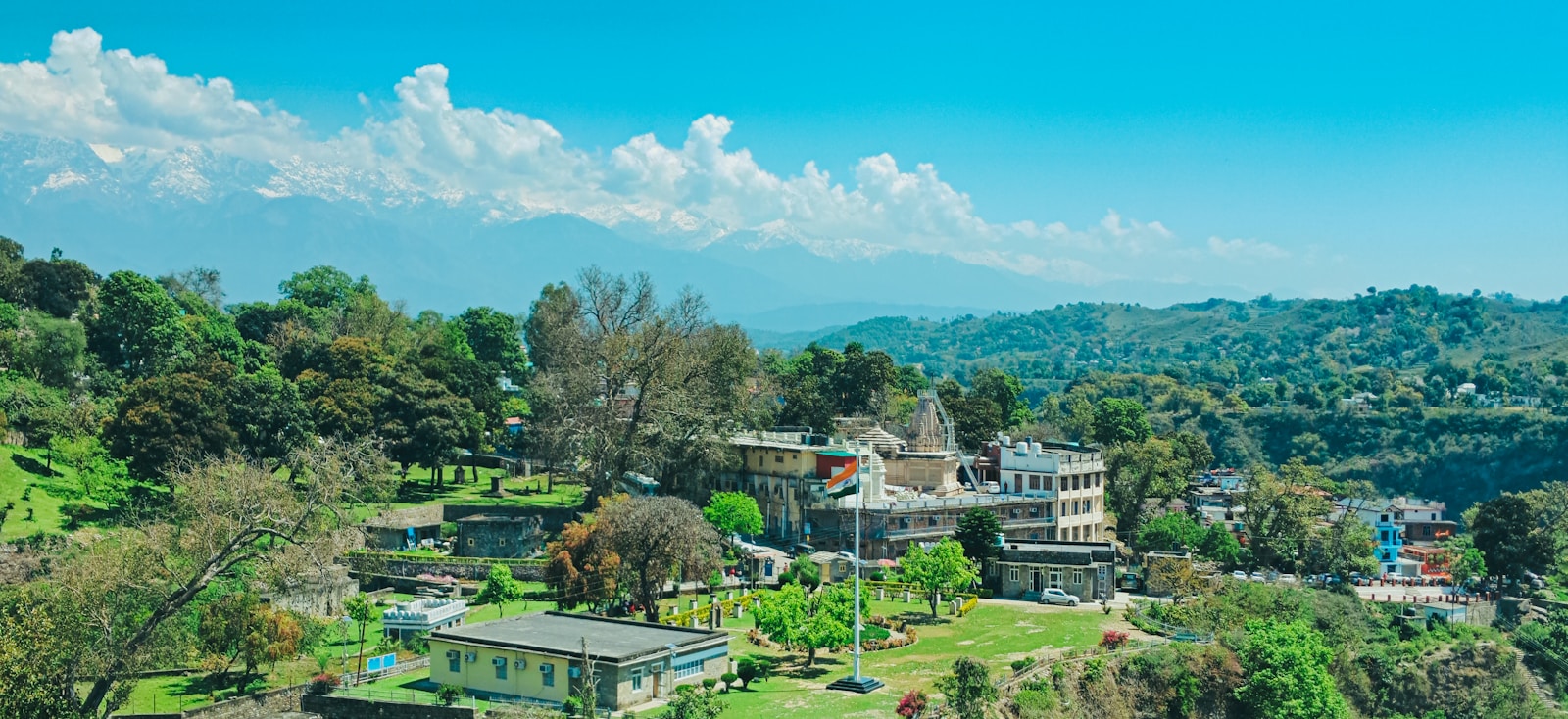
The Dharamshala listing supports a current Kangra-area connection. It may reflect restaurant menus, household familiarity, tourism presentation, or a wider regional repertoire. It does not prove that Dharamshala or Kangra created the dish. The landscape photograph accompanying this article has the same limit: it provides Kangra context but does not show Chha Gosht or establish origin.
No available authoritative source supports Chamba primacy. A reference to Chamba origin on one tourism page concerns madra, not Chha Gosht. The available material likewise does not establish a historical function, a royal origin, a fixed wedding role, or an etymology for the name. Such claims require regional-language evidence, culinary history, or attributed practitioner knowledge rather than inference from a recipe title.
The Name Does Not Settle the Recipe
It is tempting to explain “chha” as buttermilk and treat that explanation as proof that buttermilk must define every version. The available sources do not support that leap. Both government tourism descriptions and the professional recipe use yoghurt. Without linguistic evidence tied to the dish’s history, the name should not be made to carry more certainty than the recipe record.
“Gosht” also needs practical definition. In Indian usage, mutton may refer to goat in some markets and sheep in others, while a published tourism version may specifically say lamb. Species, cut, bone, age, and portion size affect cooking and safety. A useful recipe should say exactly what meat it tested instead of assuming every reader and butcher uses the term identically.
These distinctions do not weaken the dish’s Himachali identity. They make the account more usable. A cook choosing goat, lamb, or locally sold mutton can follow guidance suited to that ingredient while still recognizing a cultured-dairy-and-spice framework.
Two Published Cooking Paths
The tourism description presents one path: marinated lamb combined with gram flour and a yoghurt-based gravy, seasoned with a specified group that includes cardamom, red chilli, coriander, bay leaf, asafoetida, and ginger-garlic. This is evidence that such a version is publicly documented. It does not prove an overnight marinade, a universal tenderising function, or one required spice list.
Sanjeev Kapoor’s version follows a visibly different route. Bone-in mutton is boiled first and its cooking liquor retained. The gravy uses yoghurt and roasted gram flour, with mustard oil, asafoetida, caraway, cardamom, pepper, cinnamon, cloves, bay, onion, ginger-garlic, chillies, and coriander. The meat then joins that seasoned base and is served with steamed rice.
The contrast is valuable. One version marinates lamb; another pre-cooks mutton. One official description lists a compact spice set; the professional recipe uses a longer one and includes onion. Therefore marination, onion-free cooking, and prolonged simmering in dairy cannot be presented as defining requirements. They are decisions within individual recipes.
Households may add further variation through dairy acidity, available meat, cooking fat, vessel, pressure cooking or open simmering, gravy thickness, and the desired balance of tang and spice. Occasion matters too: a family meal, restaurant service, and large gathering place different demands on batch size and holding. The appropriate description names those choices rather than ranking them by purity.
Cultured Dairy and Gram Flour
Yoghurt is the cultured dairy used in all three directly available descriptions. A home cook should follow a tested recipe for quantities because dairy with different fat content, acidity, and water content behaves differently under heat.
Whisking the dairy smooth and moderating the heat can help control the gravy’s texture. Adding it gradually is a practical kitchen technique, not proof of historical authenticity. If the sauce separates, that may affect appearance and mouthfeel, but it does not alone determine whether the meat is safely cooked.
Gram flour, or besan, appears in the Incredible India description and Kapoor recipe. It can provide body when cooked into the gravy. It should not be described as mandatory, and it must be cooked according to the chosen recipe rather than left with a raw flour taste. For allergen communication, “gram flour” should be translated plainly as chickpea flour; a diner who avoids chickpea or legumes needs that information.
Spices Without a False Canon
The spice lists in the published sources overlap without matching. Cardamom, chilli, coriander, bay, asafoetida, and ginger-garlic appear in the tourism overview. Kapoor’s recipe adds caraway, pepper, cinnamon, cloves, onion, and other ingredients. Mustard oil is part of that professional version, but there is no basis here for declaring it or ghee universally preferred.
A careful home method selects a restrained group from an attributed recipe and adjusts heat to the diners and ingredients. It should not label one mixture the invariant Himachali spice profile. Packaged blends and compounded asafoetida should be listed by name, with package ingredients checked before a version is described as gluten-free.
The same restraint applies to sourness. The sources support cultured dairy but do not establish a requirement for lemon, dried mango, or another acid. A cook may adjust a specific recipe, but “more sour” is not automatically more traditional.
An Adaptable Home Preparation
This outline compares documented choices without supplying invented quantities or fixed times:
- Identify the meat. State whether the version uses lamb, goat, or locally marketed mutton, whether it is bone-in, and which cut is being cooked.
- Choose a documented path. Either follow an attributed marinated-lamb recipe or pre-cook bone-in mutton and reserve the cooking liquid as in Kapoor’s version.
- Prepare a measured spice base. Use the set and sequence from the chosen tested recipe rather than combining every published spice into one pot.
- Use besan conditionally. If included, identify it as chickpea flour and cook it properly; do not imply that a version without it is invalid.
- Handle the yoghurt carefully. Whisk it smooth and control heat while combining it with the base.
- Cook for both tenderness and safety. Time depends on species, cut, bone, age, size, vessel, and pre-cooking. Tenderness does not replace a thermometer or current safety guidance.
- Adjust consistency with the recipe’s liquid. Reserved cooking liquor may belong in a pre-cooked version; another method may use a different balance. Avoid adding an unsupported universal ratio.
- Serve simply. Steamed rice is directly supported by the professional recipe. Other breads and accompaniments can be offered as household choices rather than fixed tradition.
This framework is deliberately qualitative. Exact measurements belong to a tested recipe that states the meat and dairy used. A cultural overview cannot guarantee a safe cooking time across different species and cuts.
Dham, Households, Districts, and Occasions
The available evidence does not place Chha Gosht at the centre of dham. In fact, the official Dharamshala guide describes dham as a festive vegetarian meal and discusses Chha Gosht separately. That does not prove the meat dish is absent from every local celebration; it means claims about a formal dham role, leaf-plate sequence, temple function, or wedding requirement need evidence from the specific event and community.
Likewise, a Kangra association does not provide a district-wide recipe. One household may use yoghurt and onion, while another may follow a different sourced method shaped by a particular cook or occasion. Similar variation can occur across restaurants and in kitchens elsewhere in Himachal Pradesh. No available source supports a fixed Chamba, Kangra, Kullu, or Shimla profile.
The dish can therefore be both strongly Himachali and internally varied. Regional identity does not require one origin claim, while household adaptation does not erase association. Future accounts from attributed cooks can clarify where particular methods are practiced and how people name them.
Allergens and Meat Safety
Yoghurt and curd are milk ingredients. Besan is chickpea flour. Compounded asafoetida and packaged spice mixtures may include wheat or other carriers, so their ingredient labels should be checked and preserved for diners who need them.
FSSAI’s Indian household guidance should lead: prefer freshly prepared food; hold prepared food below 5°C or above 60°C; and reheat cooked food thoroughly. Current Indian and local requirements should guide the specific meat, cut, kitchen, and event.
For readers consulting United States references, USDA lists 63°C/145°F with a three-minute rest for whole lamb steaks, chops, and roasts, and 71°C/160°F for ground meat. Those categories do not cover every goat or Indian mutton stew cut. Use the standard that actually applies to the chosen meat and preparation, and use a food thermometer rather than colour alone.
USDA’s supplementary leftover guidance says to refrigerate perishable food within two hours, divide large quantities into shallow containers, keep refrigerated leftovers for three to four days, and reheat to 74°C/165°F. It also advises bringing soups, sauces, and gravies to a rolling boil during reheating. These are clearly US recommendations, not a substitute for current Indian rules.
A Strong Association Without an Invented Origin
Chha Gosht can be described confidently as Himachali and discussed in a present-day Dharamshala and Kangra context. Published versions support mutton or lamb, cultured dairy, spices, and sometimes gram flour. Beyond that centre, the evidence points towards variation rather than a single canonical dish.
What remains open—origin, etymology, Chamba or Kangra primacy, historical function, and a formal place in dham—should stay open until stronger local documentation or attributed practitioner accounts address it. That boundary protects both accuracy and the room for households to describe their own versions in their own terms.
Frequently Asked Questions
Where does Chha Gosht come from?
Government tourism sources strongly identify it as Himachali and place it in a Dharamshala local-food guide, but the available evidence does not establish a specific district of origin.
Is yoghurt documented in Chha Gosht?
Yes. The inspected government and professional versions use yoghurt. Other cultured-dairy formulations require their own complete, directly verified recipe source before being described.
Is gram flour required in every Chha Gosht recipe?
Gram flour or besan appears in published versions and can thicken the gravy, but the evidence does not make it universal. When used, it should be identified as chickpea flour.
Is Chha Gosht a centrepiece of Himachali dham?
That claim is not established by the available sources. One official Dharamshala guide discusses vegetarian dham separately from Chha Gosht, so feast roles require event-specific evidence.
What safety and allergen points matter when preparing Chha Gosht?
Yoghurt is a milk ingredient, and besan is chickpea flour. Follow current Indian guidance for preparation, holding, and reheating, and use a meat-temperature standard appropriate to the actual species, cut, and method.