Kangri Language
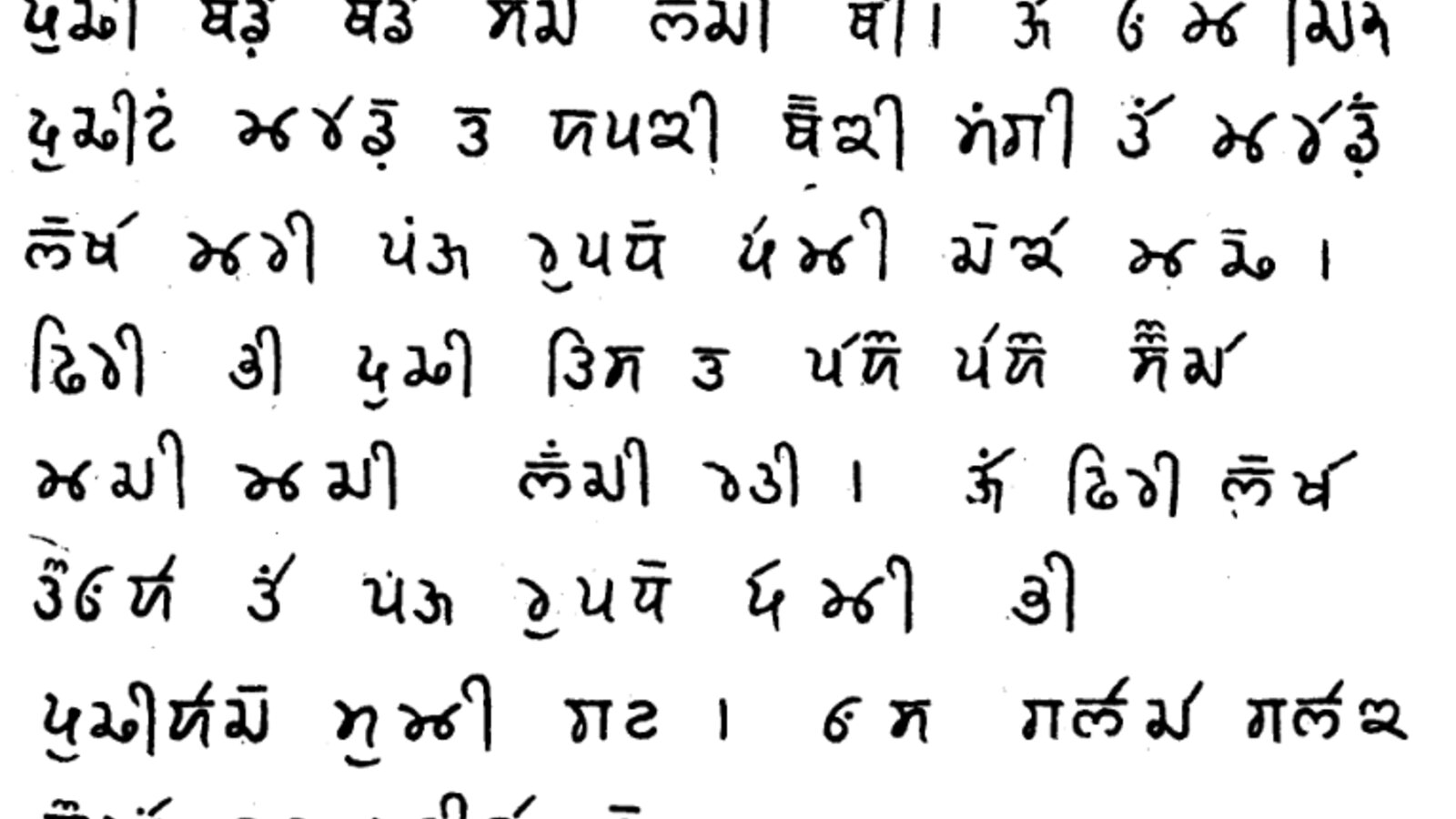
Kangri Language
Overview
Kangri (कांगड़ी, Takri: 𑚊𑚭𑚫𑚌𑚪𑚯) is a Western Pahari language spoken primarily in the Kangra district of Himachal Pradesh, along with neighbouring Hamirpur and the hilly parts of Una district. It also extends into parts of Mandi and Chamba districts in Himachal Pradesh, and into the hilly areas of Pathankot and Hoshiarpur districts in Punjab. A small diaspora community in Pakistan — descended from families who migrated from the Kangra region — continues to speak the language in a handful of villages.
According to the 2011 Census of India, Kangri has approximately 1.1 million native speakers, making it one of the largest Western Pahari varieties. It is associated with the people and culture of the historic Kangra Valley — the ancient Trigarta kingdom — and carries a rich tradition of folk songs, oral poetry, and everyday cultural expression. The language is classified by Ethnologue as part of the Dogri macrolanguage (ISO 639-3: xnr), though its speakers generally identify it as a distinct Pahari language rather than a variety of Dogri.
Background and Classification
Linguistic Lineage
Kangri belongs to the Indo-European language family, descending through the Indo-Iranian and Indo-Aryan branches into the Northern (Pahari) zone and specifically the Western Pahari subgroup. Within the internal classification used by Glottolog, Kangri (Glottocode: kang1280) falls within the Kangric-Chamealic cluster of Western Pahari, alongside Chambeali, Gaddi, Bilaspuri, and Dogri.
A Dialect Continuum
Like most Indo-Aryan languages of the Himalayan foothills, Kangri exists within a dialect continuum rather than as an isolated speech form. It shares borders and gradual transitions with several neighbouring varieties:
- Eastward — toward Mandiyali (Mandeali), spoken in Mandi district
- Northward — toward Chambeali, Gaddi, and Bhateali in Chamba
- Southeast — toward Kahluri (Bilaspuri) and Hinduri
- South — toward Baghliani, Baghati, and Keonthali dialects of Lower Mahasu Pahari
- Northwest — toward Dogri, spoken in Jammu
This continuum means that speakers of Kangri and its neighbouring varieties can often communicate with varying degrees of ease, and the exact boundary between “Kangri” and “Dogri,” or between “Kangri” and “Mandiyali,” is as much a matter of regional identity as of linguistic measurement. Some Dogri linguists have classified Kangri as part of Dogri due to the similarities and decent mutual intelligibility between them — a claim generally observed only in bordering lects and one that Kangri writers and poets have contested, advocating for Kangri’s recognition as a distinct language under the banner of Pahari.
Historical Context
The Kangra Valley has been a centre of Himalayan civilisation for over two millennia, associated with the ancient Trigarta kingdom mentioned in the Mahabharata and in records of Alexander’s contemporaries. The valley’s political history — under the Katoch dynasty, Mughal suzerainty, Sikh rule, and British colonial administration — shaped the linguistic landscape. The earliest linguistic documentation of Kangri dates to the colonial period, including Edward O’Brien’s Notes on the dialect of the Kangra valley, with glossary of words peculiar to the Kangra district (1902) and subsequent grammatical work preserved in archival collections.
Key Features
Script
The native script of Kangri is the Takri script, a Himalayan writing system historically used across the western Pahari region. Takri was employed for land records, correspondence, and literary works in the Kangra kingdom and neighbouring principalities. Today, however, Kangri speakers write almost exclusively in the Devanagari script, a shift driven by education policy and the dominance of Hindi in formal contexts. The Takri script is preserved in historical manuscripts and is the subject of ongoing digital revival efforts.
Phonology
Consonants and Vowels
Kangri has a rich phonemic inventory. Its consonant system includes bilabial, dental/alveolar, retroflex, post-alveolar/palatal, velar, and glottal articulations, with a full series of voiceless, aspirated, and voiced stops and affricates. Notably, retroflex consonants (/ʈ/, /ɖ/, /ɽ/) are present, reflecting the areal influence of northwestern Indo-Aryan. The vowel system contrasts close (/iː/, /uː/), near-close (/ɪ/, /ʊ/), mid (/e/, /ə/, /o/), open-mid (/ɔ/), and open (/æ/, /ɑː/) vowels, with nasalisation as a distinctive feature.
Tone
Kangri is a tonal language, a feature it shares with Punjabi and Dogri but which is rare among Indo-Aryan languages generally. The tonal system developed historically from the loss of aspirated voiced obstruents: where Hindi retains voiced aspirates (such as /bʱ/, /dʱ/, /gʱ/), Kangri has voiced unaspirated consonants distinguished by tone rather than aspiration. Interestingly, the tonal assignment in Kangri differs from that in Punjabi and Dogri. While Punjabi and Dogri have lost both aspiration and voicing in these cognates, Kangri has lost aspiration but retained voicing — suggesting that the tonal innovation spread westward from the Punjab/Jammu region and reached Kangri at a different stage. This is a subject of ongoing linguistic study, notably in Robert D. Eaton’s doctoral dissertation Kangri in Context: An Areal Perspective (University of Texas at Arlington, 2008).
Grammar
Pronouns
Kangri pronouns distinguish first, second, and third persons, with singular and plural numbers. The first person singular is मैं (mæ̃, “I”), plural असाँ/अहाँ (əsãː/əhãː, “we”). The second person is तू (tu, “you” sg.) and तुसाँ/त्वहाँ (tusãː/tvəhãː, “you” pl.). The third person uses सै (sæ) for both singular and plural.
Noun Cases
Kangri has an exceptionally rich case system. Using the noun घर (kʰər, “home”) as an example, the language distinguishes: nominative, accusative, ergative, comitative, instrumental, dative, ablative, genitive, inessive (घरेच, “in home”), adessive (घरे पर, “on home”), vocative, semblative, similative, and terminative cases. Oblique forms are marked by suffixation, and the plural is formed with suffixes such as -याँ (-yãː). This system is notably more elaborate than that of standard Hindi and reflects the conservative character of many Pahari languages.
Adverbial Pronouns
Kangri also has a system of adverbial pronouns — interrogative, relative, distal, and proximate forms for time, place, manner, and quantity — parallel to Hindi’s कब/जब/तब/अब paradigm but with distinct forms such as काल्लु/जाल्लु/ताल्लु/हुण for time.
Vocabulary and Oral Literature
Kangri vocabulary is rooted in Indo-Aryan, with significant layers of borrowing from Sanskrit (religious and formal registers), Punjabi and Dogri (western contact), and local Himalayan substrate words. The language’s cultural wealth is most visible in its oral traditions: folk songs (lok gīt), wedding songs, devotional hymns, and oral poetry associated with the Kangra Valley. Notable literary figures include Gautam Sharma Vyathit and Chandrarekha Dhadwal, who have been recognised for their contributions to the preservation of Kangri folk songs and for their original literary work in the language.
Status and Preservation
Kangri has no official status in India. It is commonly lumped under the generic label “Pahari” or “Himachali” in census and administrative contexts, and is sometimes claimed as a Dogri variety by Dogri linguists. According to UNESCO, Kangri falls in the definitely endangered category, meaning many Kangri children are no longer learning the language as their mother tongue.
Kangri writers and poets have made submissions for the recognition of Pahari languages through the Himachal Pradesh Academy of Arts, Culture & Languages (HPAACL). In 2010, the Himachal Pradesh Vidhan Sabha passed a resolution demanding the inclusion of “Western Pahari” under the Eighth Schedule of the Constitution, but no progress has been made. Small organisations continue to advocate for the language’s preservation, though the absence of formal education in Kangri and the dominance of Hindi in public life present significant challenges.
FAQ
What is Kangri, and where is it spoken?
Kangri is a Western Pahari language spoken by approximately 1.1 million people (2011 Census), primarily in the Kangra district of Himachal Pradesh, with speakers also in Hamirpur, hilly parts of Una, parts of Mandi and Chamba, and hilly areas of Pathankot and Hoshiarpur in Punjab. It is classified as part of the Dogri macrolanguage in Ethnologue (ISO 639-3: xnr) but is widely recognised as a distinct Pahari language. See the Wikipedia article on Kangri and Ethnologue’s Kangri page for further details.
How is Kangri different from Dogri and Punjabi?
Kangri, Dogri, and Punjabi are closely related and form part of a dialect continuum, but they differ in several respects. Kangri is tonal like Punjabi and Dogri, but its tonal system differs: Kangri retains voiced consonants where Punjabi and Dogri have voiceless ones, reflecting a different stage in the historical loss of aspiration. Kangri also has a richer case system than standard Punjabi. The three languages share significant vocabulary but are distinct enough that linguists treat them separately. Robert Eaton’s Kangri in Context: An Areal Perspective (2008) provides a detailed comparative analysis.
What script does Kangri use?
Historically, Kangri was written in the Takri script, native to the western Himalayan region. Today, Kangri speakers write almost exclusively in Devanagari, the script used for Hindi. Efforts are ongoing to preserve and digitise the historical Takri script. See the Bharatpedia article on Kangri for more on the script transition.
Is Kangri an endangered language?
Yes. UNESCO classifies Kangri as definitely endangered, meaning many children are no longer learning it as their mother tongue. The primary cause is language shift to Hindi in education and public life. The Himachal Pradesh Academy of Arts, Culture & Languages and small grassroots organisations are working to preserve Kangri through documentation, publications, and literary activity. The UNESCO Atlas of the World’s Languages in Danger tracks its status.
Where can readers learn more about Kangri?
Key references include the Wikipedia article on Kangri, Robert D. Eaton’s doctoral dissertation Kangri in Context: An Areal Perspective (University of Texas at Arlington, 2008), Ethnologue’s Kangri entry, Edward O’Brien’s Notes on the dialect of the Kangra valley (1902), and the OLAC resources page for Kangri. The Himachal Pradesh Academy of Arts, Culture & Languages is the primary institutional resource for contemporary Kangri literary production.