Fulaich and Phulaich in Kinnaur: Flowers, Local Names, and Village Variation
Fulaich and Phulaich in Kinnaur: Flowers, Local Names, and Village Variation
Fulaich—often written Phulaich in English—is best understood as a flower-centred family of local observances in parts of Kinnaur, not one district-wide festival with a fixed week and sequence. Modern field research and older ethnography agree on the importance of flowers, local religious institutions, gathering, music, and dance in named places. They also document substantial differences in name, date, duration, participating villages, deity association, flower use, and the relationship between celebration and remembrance.
That variation should lead every description. A programme from one village cannot stand in for another valley, and a historical account cannot automatically be presented as current practice. The most useful introduction therefore explains what the evidence shares while keeping each detailed example attached to its locality and period.
Key Takeaways
- Fulaich and Phulaich are English spellings, not proof of one universal local name. Historical documentation records other locality-specific names, including ookhayang, menthoko, and subtoh.
- There is no single Kinnaur-wide date or duration. Modern fieldwork records observances from August to late October and durations of four to seven days, while older accounts report additional local ranges.
- Flower gathering is organized locally. The modern study reports selected groups of two to fourteen people in surveyed places, not a rule that all village men make the same trek.
- Flowers, deities, and ritual sequences must stay tied to named villages. A study supplement records 47 plant species and many deity associations with strong place-to-place variation.
- Public gathering does not make every activity open. Temple access, alpine collection, deity offerings, songs, mourning-related observances, close recording, and publication remain community-governed.
A Festival Family, Not One District-Wide Script
The 2024 article by Swaran Lata, S. S. Samant, Shiv Paul, and P. S. Negi uses Fulaich and Ukhyang while documenting twenty-one villages or panchayats across Kinnaur. Its geographic reach includes places in the Sutlej, Bhaba, Baspa, Tidong, Jangram, Gonyul or Ropa, Gymthing, and Hangrang valleys. The breadth is useful, but it does not erase local distinction; much of the study’s strongest evidence is variation itself.
M. K. Raha’s earlier ethnography records fulaich around Rogi and Kalpa, ookhayang around Kongos and Nichar, menthoko at Kanum, and subtoh at Namgia. It also reproduces the historical English spelling phulech from an older gazetteer passage. These forms should not be declared exact synonyms in every community. They show that English transliteration and local naming have changed across place and time.
The official Himachal Tourism description offers only broad corroboration: a Kinnaur flower festival in which villagers travel to gather wild flowers and offer them. It does not establish an etymology, a fixed September date, one deity, or a common order of ritual. Claims that a particular syllable always means “flower” or “festival” therefore need a named speaker and language source before they can be included.
Even participation is not uniform. Raha reported that the related observance was not held at Chango in the locality he studied, while nearby places participated. That historical observation should not be treated as a current absence, but it directly challenges the idea that all Kinnaur observes one festival every year.
What Modern Field Research Documents
The 2024 study reports fieldwork conducted in 2019 and 2020 across twenty-one locations. Researchers interviewed 66 people aged thirty to eighty-five; 86 percent of respondents were men and 14 percent women, and the article reports oral prior informed consent. These details define the evidence. The sample provides a valuable multi-locality account, but its size and gender balance mean it is not the final voice of every village, household, age group, or ritual authority.
Across surveyed places, villages selected groups—reported as two to fourteen people—to travel to alpine or sub-alpine areas and gather flowers. That finding should not become the statement “the men of every village trek to the meadows.” Selection, number, destination, responsibility, and access belong to the locality described.
The study documents flower praise, offerings associated with local deities, and congregations in temples, streets, roads, and some high-altitude places. It also records music and dance. These are defensible shared categories, but the exact sequence differs. Public congregation in a street is not evidence that every temple interior or flower-gathering route is public.
The article is primarily ethnobotanical. Its contribution is especially strong in recording plant uses and local associations, not in providing a complete ritual ethnography. Statements reported by participants about supernatural effects, antiquity, or cultural significance should remain attributed beliefs or interpretations rather than independent historical facts.
Why the Calendar and Duration Move
The modern study records observances between 10 August and 26 October and reports durations of four to seven days across several valleys. That span is incompatible with a single claim that Phulaich always begins on the sixteenth of Bhadrapada, lasts one week, reaches a procession on the twentieth, and ends on the twenty-third.
Raha’s historical material reinforces the point. He places related observances between the tenth of Bhado and the beginning of Kartik and reports two-to-three-day durations in some places and four-to-five-day durations in others. He explains that a village or connected set of villages maintained its own date. Altitude, flower availability, agricultural work, journeys between settlements, and attendance by relatives could all shape timing in the period documented.
These are historical explanations, not a formula for predicting this year’s date. Flowering conditions and travel arrangements change, and religious decisions may follow local institutions. A responsible event listing should identify the announcing village or group, the year, the local name, and the authority providing the schedule.
“September flower festival” may work as a loose tourism shorthand for some localities, but it excludes documented August and October observances. “Peak flowering season” is similarly too broad to guide a visit. The right date is the one currently confirmed by the locality concerned.
Local Examples That Must Remain Local
Around Rogi and Kalpa, Raha used the name fulaich. Around Kongos and the Nichar area, he used ookhayang. In one historical example, Kongos, Sungra, and Ponda shared an Ookhayang observance under Mahesur of Sungra, dated to 12–15 Asoj in the period he described. This demonstrates a connected multi-village form, not a permanent schedule for Nichar or Kinnaur as a whole.
At Kanum, Raha used menthoko and distinguished mourning-related observance associated with another festival rather than merging every death rite into Fulaich. At Namgia, he recorded subtoh. These examples show why a generic “ancestral flower festival” can be misleading: remembrance may be important in particular accounts, but its place in the sequence and its relation to mourning differ.
The modern study’s supplement offers equally precise examples. Respondents in Chhitkul associated flower offerings with Mathi Devi and Guptraj. Ribba respondents named Kasuraj, Tiken Nagin, and Narenus. Moorang respondents named Ormig Shu and Chandika Devi, while Nichar respondents named Usha Devi. These records do not create a combined Kinnaur pantheon for one universal Phulaich procession.
The same locality rule applies to duration, who gathers flowers, where people assemble, and how flowers are used. A detail becomes more accurate when its village remains attached. Removing the place does not make the article more comprehensive; it makes the claim less reliable.
Flowers, Ecology, and the Case for Restraint
The 2024 research documents reported uses of 47 plant species, but its supplementary table shows strong village-by-village variation. A species associated with an offering in one location cannot be advertised as an essential Phulaich flower everywhere. The evidence does not support a universal Ladra bouquet, nor an unlocalized list of rhododendron, Himalayan rose, blue poppy, and other plants.
Some recorded plants carry threatened-status concerns. That makes a visitor-oriented picking guide especially inappropriate. The table documents what respondents reported; it is not permission to locate, harvest, carry, photograph closely, or publish sensitive collection sites. Alpine and sub-alpine terrain may also be hazardous, and designated gatherers may hold responsibilities that a visitor does not.
Observation should therefore be non-extractive. Do not follow gatherers without invitation, request that flowers be rearranged for a photograph, remove a specimen, or geotag a sensitive place. If organizers provide a permitted display or public explanation, record the locality and speaker rather than converting it into a district-wide botanical rule.
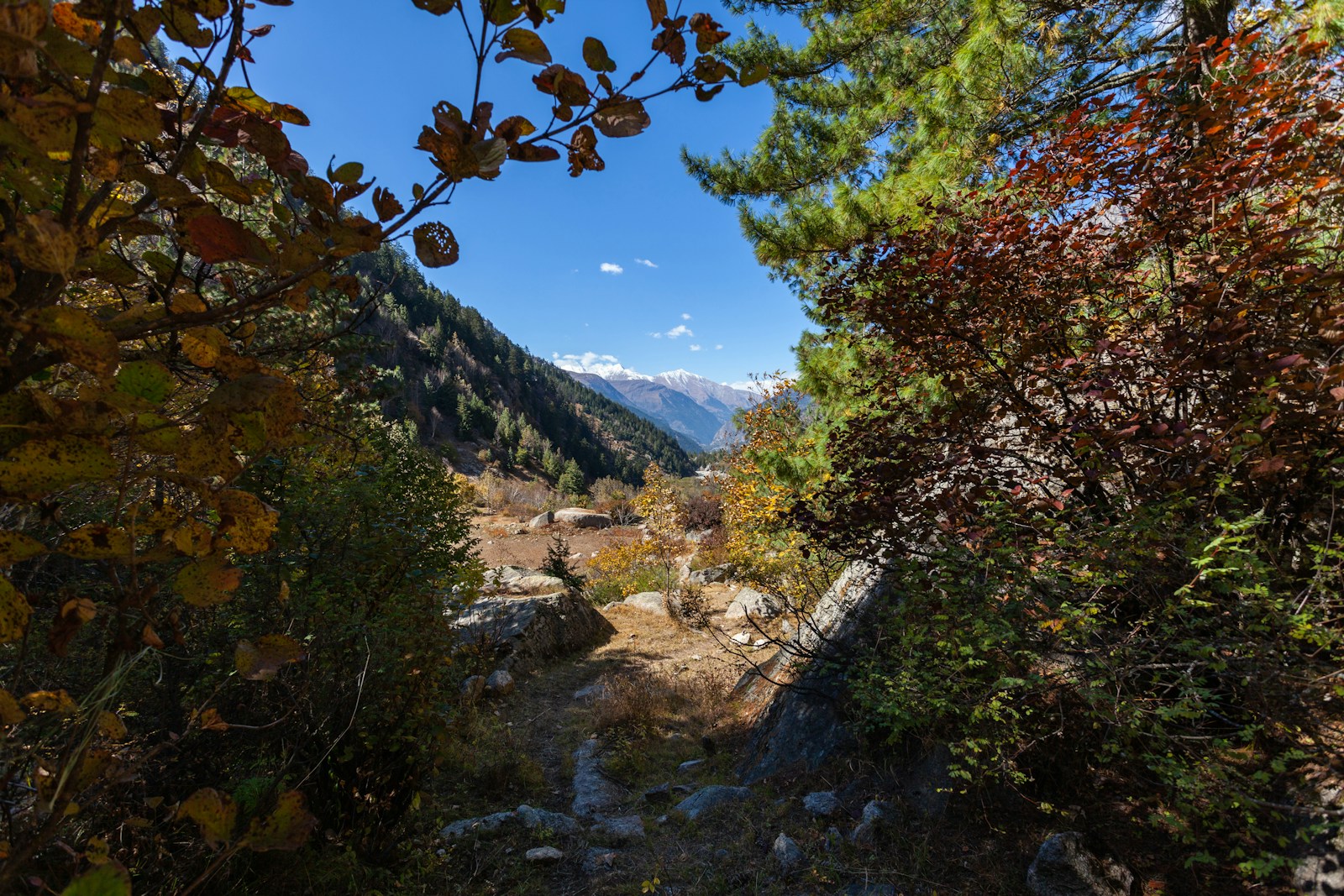
The forested Kinnaur landscape in this article’s hero image is deliberately contextual. It does not show Fulaich, a gathering route, a sacred place, a participant, or any of the plants documented in the research.
Remembrance Without a Universal Mourning Sequence
Both modern and historical sources connect some local observances with departed relatives, annual death rites, or the ending of mourning. That evidence supports careful discussion of remembrance as a documented dimension in some places. It does not support a standard sequence in which every village first offers flowers and food to the deceased and then distributes food in a prescribed way.
Mourning practices may be household-specific, time-bound, and private. Raha’s account at Kanum is important because it separates observances that generalized summaries often fuse. The ethical response is not to reconstruct a cleaner sequence, but to preserve uncertainty and ask the appropriate family or ritual authority what may be shared.
The same caution applies to origin legends, sacrifices, alcohol, war interpretations of dance, and the material decoration of deity processions. Such elements may appear in particular historical or contemporary accounts. None should be presented as a current Kinnaur-wide custom without locality-specific verification.
Visiting and Documenting with Permission
Publicly announced music, dance, street gatherings, or cultural programmes may be open to visitors, subject to the current organizer’s instructions. That possibility does not extend automatically to temples, sacred high-altitude places, flower-gathering parties, deity palanquins, ritual specialists, mourning households, private feasts, or offerings.
Confirm the current name, date, duration, location, and public programme with local organizers. Ask separately about attendance, photography, audio or video recording, identifying people, quoting explanations, and publishing or reusing material. Permission from one participant does not replace authorization from temple or deity institutions, performers, households, or other rights holders.
Do not stage a sacred action or ask participants to repeat it. Keep distance from moving palanquins and processions, follow crowd directions, and verify roads, weather, and access immediately before travel. Do not promote unsupervised alpine trekking or flower collection.
For editors, the minimum useful caption includes village or valley, local name, year, event context, photographer, consent status, and any publication limits. A correction from another locality should not erase the first account; it may reveal that both are locally accurate. That is the central lesson of Fulaich and Phulaich: flowers connect these observances, but place gives each description its proper scope.
What Better Documentation Still Requires
The strongest next step is community review across several valleys, including women, younger participants, gatherers, ritual authorities, musicians, and households involved in remembrance. Current documentation should ask how residents spell and pronounce the local name, how dates are selected, what is publicly announced, and which knowledge should remain unrecorded.
Plant names need equal care. Vernacular name, botanical identification, locality, respondent, collector role, and permission should not be collapsed into a generic checklist. Historical descriptions need date labels, and current practice should never be inferred solely from an older ethnography.
Until that work is complete, a precise introduction can still say a great deal: flower-centred observances occur in multiple Kinnaur localities; names and calendars vary; selected groups may gather flowers; deity associations and remembrance are place-specific; and public celebration does not dissolve ecological or sacred boundaries.
Frequently Asked Questions
Are Fulaich and Phulaich the same spelling everywhere?
They are two English spellings used for related flower-centred observances, but local names vary further. Historical ethnography records fulaich, ookhayang, menthoko, and subtoh in different places, so writers should preserve the name used in the locality concerned.
When is Fulaich or Phulaich celebrated in Kinnaur?
There is no single district-wide date. Modern field research records observances from 10 August to 26 October, while historical work explains that dates varied with locality, altitude, flowers, agricultural work, travel, and local decisions.
How long does the festival last?
Duration varies by place and source. Modern research reports four to seven days among surveyed locations, while older ethnography records two or three days in some places and four or five in others. Current village programmes should be confirmed locally.
Which flowers and deities belong to Phulaich?
No one list applies throughout Kinnaur. The modern study records 47 plant species and many deity associations, but its supplement ties them to named villages. Those records document local reports and do not authorize visitors to collect flowers or handle offerings.
Can visitors follow flower gatherers or record ceremonies?
Not without explicit permission. Public programmes, temple access, alpine gathering, sacred objects, songs, mourning-related observances, photography, recording, and publication may have different authorities and consent requirements.