Halda in Lahaul: A Locality-First Guide to a Winter Festival of Lights
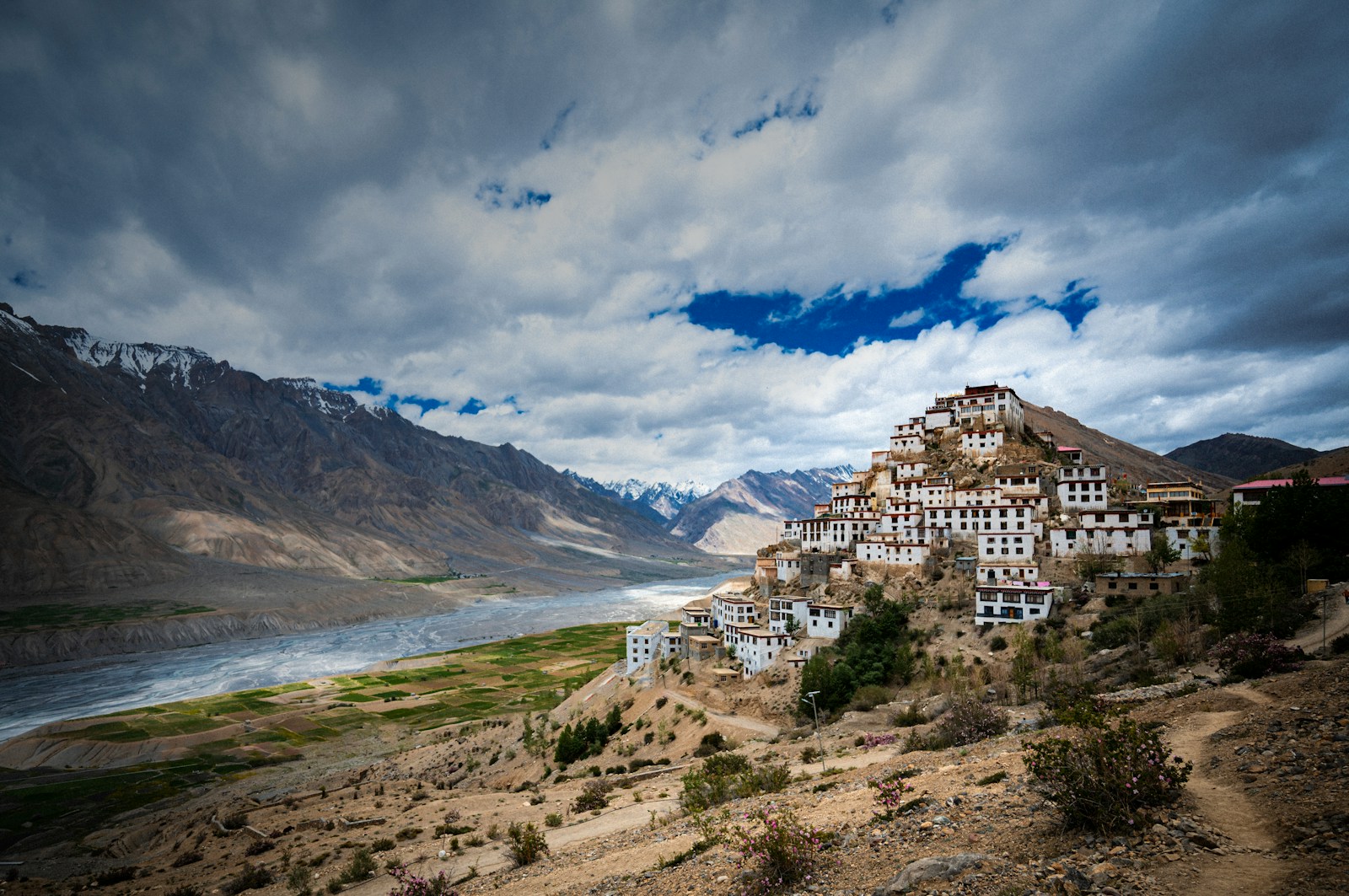
Halda in Lahaul: A Locality-First Guide to a Winter Festival of Lights
Halda is best approached as a locally varied winter festival-of-lights tradition in Lahaul, not as one standardized event with a single date and script. Government descriptions agree on a striking public image: households light bundled cedar-wood torches and people bring them toward a central gathering place in the winter night. Yet the official district account also preserves an essential distinction. In Pattan Valley, the related observance is called Khogla; it uses Halda for other valleys of Lahaul.
That naming difference is not a minor footnote. It changes how the festival should be described, searched for, and discussed with residents. Dates and sequences also vary. A broad calendar listing can offer orientation, but current information must come from the particular valley, village, host, or religious authority involved.
Key Takeaways
- Halda is a family of local observances rather than one Lahaul-wide template. Names, dates, sites, associated deities, and the place of the torch gathering within a longer calendar can differ.
- Pattan Valley’s official name is Khogla. The District Lahaul and Spiti account distinguishes Khogla in Pattan from Halda in other Lahaul valleys, so the two names should not be flattened into one label.
- Cedar torches and a central gathering are the clearest shared public elements. Official sources describe bundled cedar strips lit at households and carried to a selected place, where household contributions form a larger fire.
- The calendar is locally determined. District material gives broad January timing, links Pattan’s Khogla to Magh Poornima, and says a lama fixes the date; these points do not create one annual date for all valleys.
- Visible celebration can sit beside restricted practice. A Kardang record places Halda before a village-specific Bagh observance with strict access rules. Public visibility of one moment is not permission to enter, record, explain, or reproduce another.
A Festival of Lights Without One Uniform Template
The District Lahaul and Spiti government describes Halda and Khogla as comparable festivals of lights. Its account places Khogla in Pattan Valley and Halda in other valleys of Lahaul. Himachal Tourism’s public descriptions situate Halda more broadly in the Chandra-Bhaga valleys and emphasize deep-winter torchlight. Read together, these sources establish a related regional tradition while also warning against treating every locality as interchangeable.
The distinction matters because older festival summaries often compress local practices into a single statewide paragraph. That approach can turn one village’s name into everybody’s name, one reported date into a permanent schedule, and one observed sequence into a universal custom. Halda requires the opposite method: identify the place first, then state only what evidence from that place supports.
This also means avoiding claims that the festival is universally dedicated to one deity. The district page discusses Shikhara-Appa in connection with Fagli, not Halda, so that dedication cannot be assigned to every Halda observance. Likewise, attractive explanations about ancient origins, a single religious synthesis, or one fixed purpose go beyond what the verified public sources establish.
A careful description can still convey the festival’s force. Fire moving from individual households toward a shared winter gathering is a powerful public form. Its meanings, however, should be attributed. Himachal Tourism interprets the torch-bearing as driving away evil forces; that is an official tourism description, not permission to define what every participant believes.
Where Names and Calendars Differ
The district administration places the observance broadly in the second or third week of January, while tourism descriptions use looser phrases such as deep winter or New Year time. Those are orientation ranges, not schedules. The district account says that a lama determines the date and specifically associates Pattan Valley’s Khogla with Magh Poornima, the full moon.
A separate Himachal Tourism description uses Magha Poornima more generally for Halda. The more place-specific district account is the safer guide: the full-moon statement belongs to Pattan’s Khogla unless a current authority in another locality confirms otherwise. It would be inaccurate to turn that one association into “Halda always falls on Magha Poornima.”
Calendar variation is therefore part of the subject, not a problem to edit away. A useful event note should name the village or valley, identify who announced the date, and record the year. Without those details, even a correct date from one season may mislead readers planning for another.
The same discipline applies to duration. Himachal Tourism says singing and dancing around a bonfire may continue for a couple of days. That supports the possibility of extended festivities in the setting described, but not an exact two-day rule across Lahaul. A torch gathering may also occupy one night within a longer local sequence, as the Kardang record demonstrates.
What Official Public Accounts Describe
The most consistent material concerns the torches. The district page says branches of “pencil cedar” are cut into strips and tied into bundles called Halda. In the evening, torches are lit at households and brought to a central place. Tourism material similarly describes cedar-wood torches and says wood from households contributes to a bonfire at a place selected by lama priests.
These are descriptions, not construction instructions. The species terminology, collection rights, fire conditions, and organizer’s safety arrangements all require current local knowledge. A cultural article should not tell readers how to cut wood, bind a torch, ignite it, or join a procession. It is enough to explain why the movement of many household lights toward a common fire is the most visible documented form.
The district page also says the gathering may be repeated four or five times in honour of different deities. That is evidence for the administrative account’s scope, not proof that every household or village follows an identical count. No verified source here supports a universal taxonomy of three torch types, a zodiac-based torch maker, a snow-and-prosperity exchange, water-vessel rites, or offerings to Bali Raja. Those details should remain out unless a named local source establishes where and when they apply.
Official accounts mention singing and dancing in broad terms. They do not establish which songs are public, who may perform them, what words may be published, or whether recording is permitted. The distinction between witnessing and reproducing remains important even at an announced gathering.
Kardang as One Village-Specific Sequence
Filming Lahaul provides a locally grounded account from Kardang village in January 2017. In that documented sequence, residents brought out Halda at night. The next afternoon they gathered for mangs-alcha, translated in the post as opening the masks or “opening of the dream,” before a three-day Bagh observance.
This record is valuable precisely because it is specific. It shows that Halda can be one night within a longer village ritual calendar. It does not prove that mangs-alcha follows Halda everywhere, that Bagh is part of every Halda, or that a three-day sequence defines the festival across Lahaul.
The same post records strict village-bound access rules for Kardang’s Bagh. Outsiders were not ordinarily permitted to witness it, and the account says people who entered before Kuns were expected to remain until the ritual ended. It also reports that anthropologist Elisabeth Anne Stutchbury had not been permitted to document the mask ceremony during earlier fieldwork. Those restrictions concern the adjacent Kardang Bagh observance; they should not be carelessly reassigned to the publicly described torch gathering.
A second Filming Lahaul post records an account of Nangcha as the day after Halda, when households remain indoors and keep quiet so as not to disturb the family deity. Its exact locality is not established in the passage. It is therefore evidence that such an account exists, not a rule for Kardang, an entire valley, or all Lahaul.
Public Celebration and Restricted Practice
The public record supports broad description of local winter timing, cedar torches, household lighting, movement to a central place, and a communal fire. It can also support attributed mention of singing and dancing. More detailed household rites, deity-specific observances, sacred words, songs, masks, offerings, and role assignments require direct authorization from the relevant locality and institution.
This boundary protects accuracy as much as privacy. A restricted observance may depend on hereditary roles, village membership, or obligations that an outside summary cannot explain responsibly. Even when a practice is visible from a public place, that does not automatically authorize close photography, audio recording, naming participants, publication, or reenactment.
Kardang is the clearest example in the available material. Its documentation should prompt caution, not curiosity-driven instructions. The appropriate conclusion is that Halda’s visible torch moment may be near practices governed by a different access regime. Visitors and editors must ask where one ends and another begins.
Planning a Respectful Visit or Documentation Project
For a respectful visit or documentation project, first confirm the current local name and date with a host, village authority, or event organizer. Ask whether visitors are welcome before making winter travel plans. Road, weather, transport, and emergency information can change quickly and should be checked through current official notices immediately before travel.
Second, separate permissions. Permission to attend is not permission to photograph. Permission to photograph is not permission to record audio, identify a person, quote an explanation, or publish an image. A participant’s consent also may not replace authorization from a village, household, monastery, deity institution, or hereditary rights holder.
Third, do not stage the event for content. Torches, songs, sacred gestures, masks, offerings, and processional movement should not be recreated or redirected for a camera. For fire and crowds, use only organizer-approved viewing areas and follow current instructions. No photograph is worth obstructing participants or crossing a ritual boundary.
Finally, record provenance with every account. Note the valley, village, year, speaker’s preferred attribution, and whether the description concerns a public gathering, household practice, or restricted observance. This prevents one person’s explanation from becoming an unsupported claim about all Lahaul.
What Remains Uncertain
Current public evidence does not provide a complete valley-by-valley calendar, a single accepted transliteration system, or a comprehensive account of present practice. Tourism descriptions and the district page differ in how broadly they connect the full moon with Halda. The precise scope of the Nangcha account also remains unclear. Any academic treatment of Kardang requires direct verification of the relevant text and pages before its claims can be added.
These gaps are reasons for a stronger locality-first article, not reasons to fill in missing details. Future revision should prioritize named community reviewers from multiple Lahaul valleys, current Pattan documentation using the name Khogla, and explicit guidance from Kardang authorities on what may be described. Until then, the most accurate introduction is modest: related lights, distinct places, locally governed calendars, and boundaries that outsiders must respect.
Frequently Asked Questions
Are Halda and Khogla the same name everywhere in Lahaul?
No. The district administration calls the related Pattan Valley observance Khogla and uses Halda for other valleys of Lahaul. Local speakers and hosts should be asked which name applies in a particular place.
When does Halda take place?
There is no single dependable Gregorian date for every locality. Official accounts describe broad deep-winter or January timing, say dates may be fixed locally by a lama, and connect Pattan Valley's Khogla specifically with Magh Poornima.
What part of Halda is publicly documented?
Official public descriptions cover cedar-wood torch bundles, evening movement from households to a central place, a bonfire, and in some accounts singing and dancing. They do not establish one complete ritual sequence for every village.
May visitors photograph Halda and nearby observances?
Attendance, photography, recording, and publication are separate permissions. Ask current village and event authorities before arriving, and treat Kardang's adjacent Bagh observance as restricted unless authorized by the relevant Kardang authorities.
Does the Kardang account describe Halda throughout Lahaul?
No. It documents one village sequence in January 2017. It is useful for showing how Halda can sit within a longer local calendar, but Kardang's post-Halda Bagh restrictions cannot be exported to other villages.