Kinnauri Languages
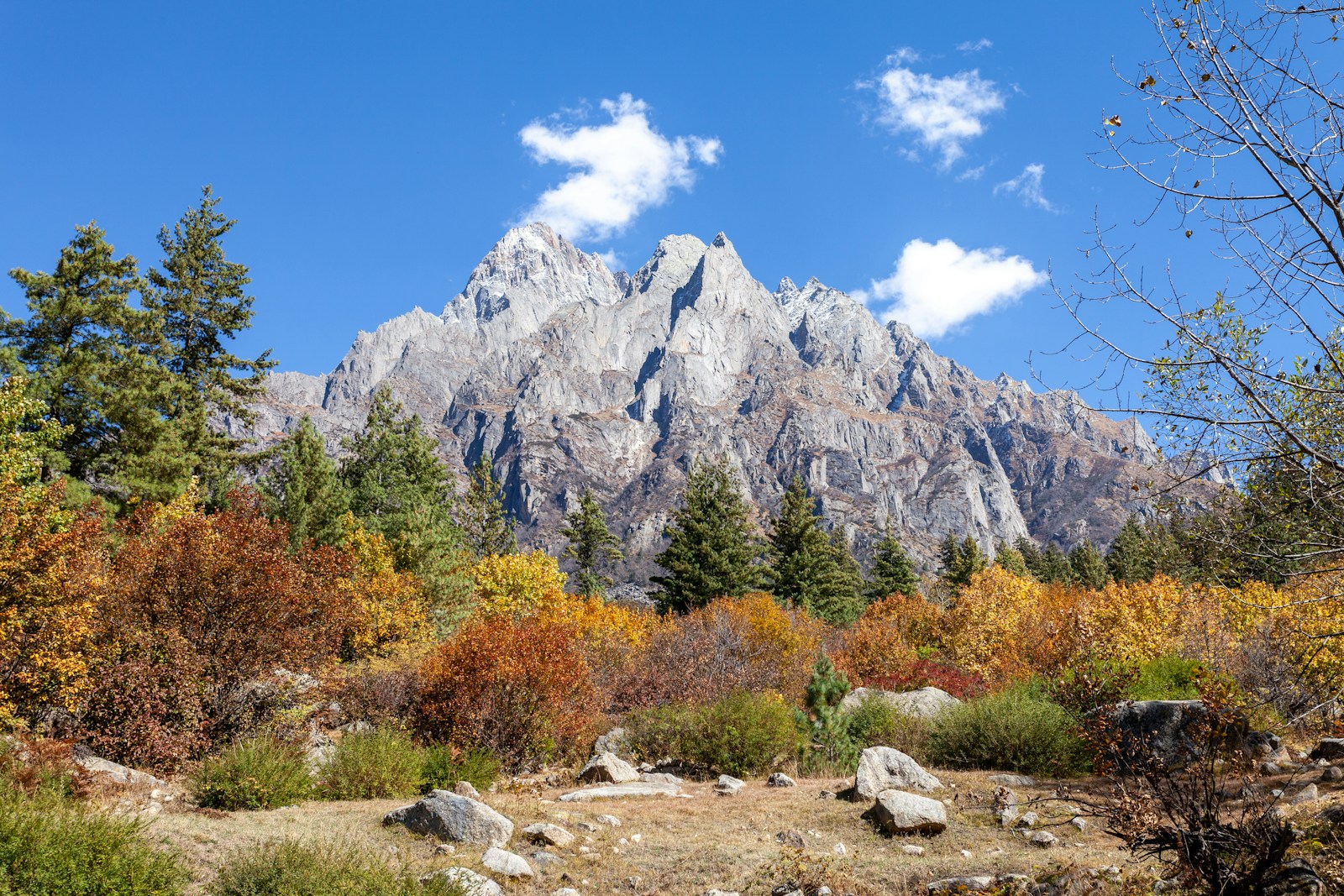
Kinnauri Languages
“Kinnauri” is a necessary name and an easy one to misuse. It can refer to a particular language, appear as a broad regional description, or identify a category in an official table. None of those uses automatically covers every form of speech in Kinnaur district. Current scholarship instead describes a multilingual ecology in which language family, village, community, administrative boundary, and ethnic identity overlap without aligning perfectly.
Anju Saxena’s study of languages in Kinnaur makes the central distinction clear: Kinnauri and Navakat are Sino-Tibetan languages, while Kinnauri Pahari is Indo-Aryan. Other names also matter. Glottolog maintains separate records for Chhitkul-Rakchham and Jangshung, for example. That catalogue does not make the list exhaustive, but it demonstrates why a single “Kinnauri dialect cluster” is too simple a model for the district.
Key Takeaways
- Kinnaur is a district of languages, not one uniform district language. Locality and community are essential to any accurate description.
- The name Kinnauri operates at several levels. A linguistic record, a census category, a regional identity, and a speaker’s own name for their speech may not mean the same thing.
- Language-family distinctions must remain visible. Sino-Tibetan Kinnauri and Navakat should not be merged with Indo-Aryan Kinnauri Pahari because they share a regional label.
- A village-specific description is not a district-wide grammar. Saxena’s Kinnauri Pahari chapter identifies the Chamang sub-community and the villages represented in its data.
- Census returns are demographic evidence, not linguistic classification. They record a reported mother-tongue name after administrative processing, not mutual intelligibility, proficiency, or ancestry.
- Documentation should begin with contributors’ own names and scope. Language, place, speaker, genre, date, and consent belong beside recordings, texts, and translations.
One Regional Name, Several Kinds of Meaning
A regional name can be socially meaningful without defining one linguistic object. Someone may identify strongly as Kinnauri while speaking one of several local languages, using Hindi in some settings, or participating in a multilingual household. Conversely, a linguistic catalogue may distinguish languages that residents connect through a wider Kinnauri identity. Classification and belonging answer different questions.
Written sources also vary in spelling and scope. “Kanauri,” “Kanawari,” and related forms occur in older surveys and catalogues. The official Survey of Kanauri in Himachal Pradesh is valuable evidence of how institutions documented and grouped speech in an earlier period. Its umbrella terminology should not silently overrule newer fieldwork or a contributor’s preferred name. A historical label is part of the documentation history, not proof that every form placed beneath it is one language today.
This is why locality-first naming is more than editorial caution. A title such as “Kinnauri song” may conceal whether the performance was in Kinnauri, Navakat, Kinnauri Pahari, Chhitkul-Rakchham, Jangshung, or another locally named form. Recording the name used by the performer, along with place and context, preserves information that a regional tag alone discards.
A Multilingual Ecology Across Language Families
Saxena’s 2022 monograph treats Kinnauri, Navakat, and Kinnauri Pahari as independent linguistic entities within a multifaceted ecology. The first two are described as Sino-Tibetan; Kinnauri Pahari is Indo-Aryan. This distinction corrects the common but inaccurate claim that everything called Kinnauri belongs to a single Sino-Tibetan cluster.
Separate Glottolog records for Kinnauri, Chhitkul-Rakchham, and Jangshung provide another reminder that catalogues recognize more than one spoken language in the region. Their identifiers belong to those records, not to the district as a whole. Kinnauri’s ISO 639-3 code kfk, for instance, must not be assigned to Navakat, Kinnauri Pahari, Chhitkul-Rakchham, or Jangshung.
Nor should classification be converted into a social hierarchy. Calling one form a “proper” language and another a minor dialect can imply a standard that the evidence has not established. Linguistic relatedness does not decide whose speech is authentic, and a district boundary does not create uniform grammar. The more defensible approach is to name each documented entity as precisely as the source permits and state when terminology remains uncertain.
Villages and Communities Define the Scope of Description
Mountain geography is often used as a sweeping explanation for linguistic diversity. Valleys, ridges, routes, and seasonal accessibility certainly shape contact, but terrain alone does not explain who speaks what. Marriage networks, occupations, community histories, institutions, mobility, and individual repertoires also matter. These factors require local evidence rather than a generalized story of isolated villages.
The Kinnauri Pahari chapter offers a useful model of explicit scope. It describes data representing the Chamang sub-community, with speakers in Brua and Sangla in Sangla tahsil and Chagaon in Nichar tahsil. Those names are not incidental details. They identify whose speech informed the analysis and prevent its grammatical observations from being assigned automatically to every Kinnauri Pahari speaker.
The same rule applies to archived songs, vocabulary, narratives, and writing samples. A form documented in one village may be understood elsewhere, but that possibility cannot be assumed. A responsible caption records the locality, the name contributors use, and any relevant community or performance context. Comparison can follow after the sources have preserved difference.
Multilingual Repertoires Are Not Evidence of Loss by Themselves
People can use different languages with family, neighbours, officials, teachers, customers, or online audiences. Such choices may reveal flexible multilingual competence. They may also change across generations. Without a study tied to a named language, place, sample, and date, however, the presence of Hindi or another regional language does not prove that a Kinnauri language has disappeared from the home.
Available sources do not support one district-wide claim about school language, household transmission, or youth preference. Glottolog reports variety-specific vitality assessments derived from underlying sources: its Kinnauri record says “shifting,” its Chhitkul-Rakchham record says “threatened,” and its Jangshung record gives a low-confidence “shifting” assessment. These aggregated labels may direct readers to further research, but they are not a current field survey of every community.
It is equally unsafe to move in the opposite direction and declare all varieties secure because they remain visible in conversation or cultural events. Frequency of public performance, first-language acquisition, literacy, comprehension, and daily use are different measures. Each requires evidence at the appropriate local scale.
Writing, Orality, and the Danger of a Single Script Story
Institutional documentation reports a rich oral literature and discusses both Takri and the growing prominence of Devanagari. That does not establish a universal script for everything called Kinnauri. Historical script traditions, contemporary practical writing, and oral transmission can coexist, with different choices by language, locality, writer, genre, and period.
The claim that “Kinnauri has no script” erases historical and present writing. The opposite claim that “Kinnauri is written in Takri” can imply a single continuous, commonly read orthography across distinct languages. Neither conclusion follows from available evidence. Exact script claims need the relevant pages of a language report, a dated document or publication, and clear identification of the language represented.
Oral material needs the same precision. A recording preserves more than words: speaker attribution, place, occasion, audience, and genre affect its meaning. Public visibility does not grant permission to reproduce or translate a performance. Consent for recording, archiving, transcription, translation, and public release should be discussed separately, especially where a contribution may be private or restricted.
What Census 2011 Can and Cannot Show
The Census of India C-16 table reports mother-tongue returns across geographic and demographic categories. Its methodology allowed respondents to give the name they regarded as their mother tongue; the census then rationalized a very large number of raw names for tabulation. “KINNAURI” appears as an administrative language heading in that system.
This makes C-16 useful for studying where people returned a Kinnauri label, including outside Kinnaur district. It does not turn that heading into a linguistic family tree. The category does not resolve the relationship among Kinnauri, Navakat, Kinnauri Pahari, Chhitkul-Rakchham, Jangshung, and local names according to current field research.
A census return is also not a proficiency test. It does not directly measure how often a language is used, whether children acquire it, which other languages a person speaks, or how an individual understands ethnolinguistic identity. Without verification of the exact workbook row, geography, and aggregation, a defensible speaker total cannot be stated.
Geographically dispersed returns can indicate that a label was reported beyond the district. They do not by themselves demonstrate a cohesive diaspora, shared institutions, or successful intergenerational transmission away from Kinnaur. Those questions remain research gaps.
Documentation That Preserves Local Knowledge
A useful language record begins by asking rather than assigning. What does the contributor call the language? Is another name used by neighbours, officials, or scholars? Which village or locality shaped the material? Is the contribution everyday conversation, a narrative, a song, a ritual register, a word list, or a remembered text? Who may hear, quote, translate, or republish it?
For recordings, the original audio should be kept with date, place, contributor-approved attribution, and consent terms. Transcription and translation should remain linked to the source rather than circulated as anonymous “Kinnauri vocabulary.” If a contributor prefers a particular script or spelling, that choice can be preserved alongside a searchable transliteration without declaring it the district standard.
Comparison across places can be valuable when every sample retains provenance. It can reveal contact, shared forms, and differences without assuming that one village represents another. Community members should be able to correct names, restrict sensitive material, and decide how they are credited.
The most accurate portrait of Kinnauri languages is therefore not a flattened list of dialects. It is a map of named, situated contributions and scholarly descriptions whose limits remain visible. Kinnaur’s common identity and linguistic plurality do not contradict each other. Precision allows both to be represented.
Frequently Asked Questions
Is Kinnauri one language spoken throughout Kinnaur district?
No. Kinnaur has a multilingual ecology that includes separately described languages from more than one language family. Kinnauri can name a particular Sino-Tibetan language, while broader regional and census uses of the word may cover or sit beside other local names.
Is Kinnauri Pahari the same language as Sino-Tibetan Kinnauri?
No. Current scholarship treats Kinnauri Pahari as Indo-Aryan and Kinnauri as Sino-Tibetan. The shared regional name is one reason every grammatical or documentary claim needs a named language, locality, and community.
What does the KINNAURI category in Census 2011 measure?
It tabulates returns under an administrative mother-tongue heading after census classification. It does not by itself identify linguistic ancestry, proficiency, daily use, child transmission, or every locally named language in Kinnaur.
Does Kinnauri have one standard script?
Available sources do not establish one universally adopted writing practice for all languages called Kinnauri. Historical or local Takri traditions, contemporary Devanagari use, and primarily oral domains must be documented for the particular language and community concerned.
How should Kinnauri language material be documented responsibly?
Record the speaker's preferred language name, village or locality, community when contributors want it noted, date, genre, and consent terms. Preserve original audio or images and avoid turning one person's words or one village description into a district-wide standard.