Chamba District
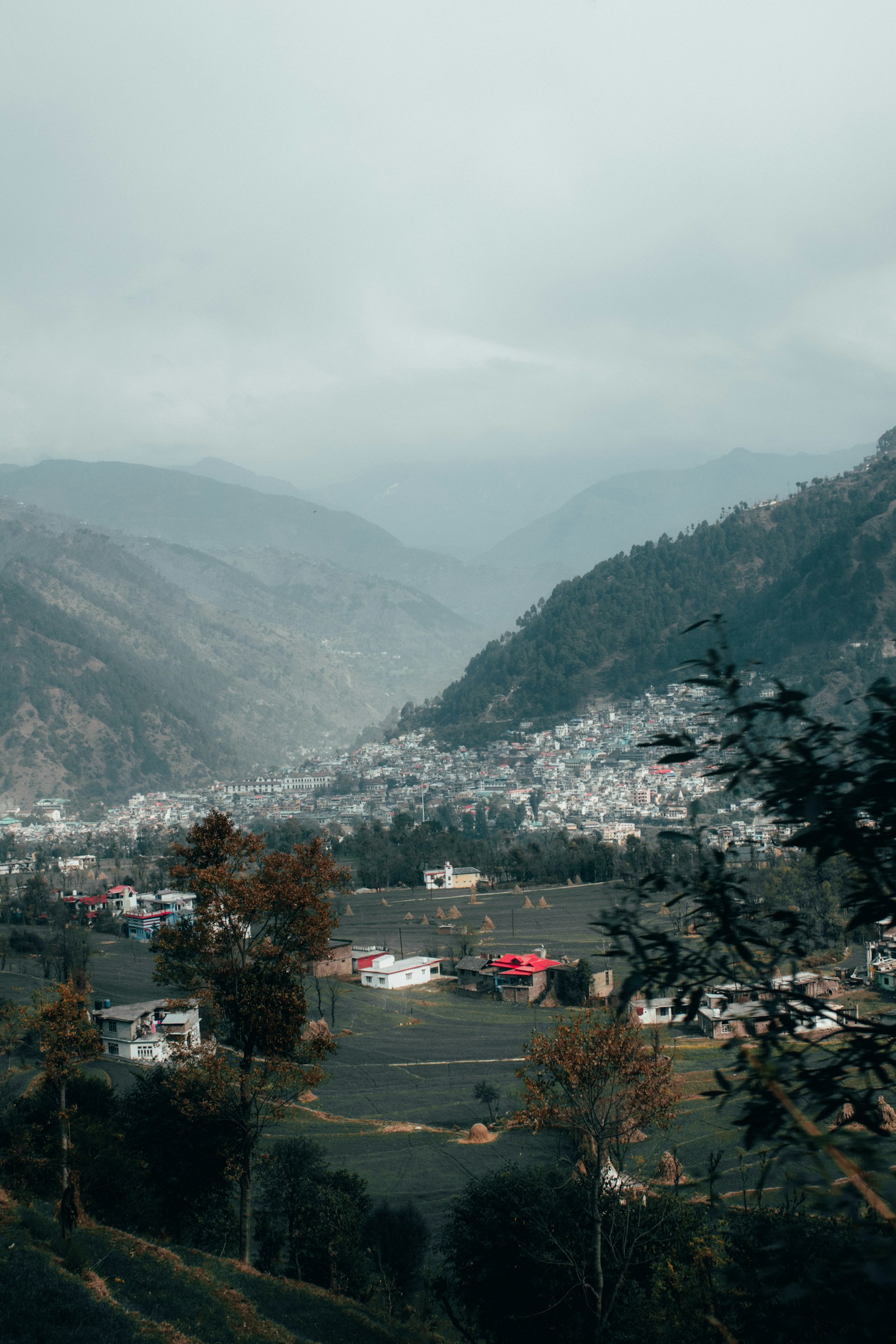
Chamba District
Chamba’s past is unusually visible, but it is not a single uninterrupted story. Stone inscriptions, copperplate grants, temples, manuscripts, coins, photographs, court objects, and administrative papers survive in significant numbers. These records make it possible to test parts of royal chronology and patronage against material made closer to the events being described. They do not give every century, place, or community equal attention.
Three categories therefore need to remain separate. Epigraphic and archival evidence records particular donors, grants, titles, institutions, and political relationships. Dynastic and foundation traditions explain origins through royal migration, Sahilla Varman, Champavati, and sacrifice. Modern official retellings arrange those materials into an accessible district narrative. Each category answers different questions, and none can stand for the entire history of Chamba town, Bharmour, Bhattiyat, Churah, Pangi, and the district’s other localities.
Key Takeaways
- Chamba has a substantial but selective documentary record. Inscriptions and copperplates illuminate named rulers, grants, religious patronage, and political relationships, while revealing much less about many households and communities.
- Foundation stories require attribution. The moves associated with Maru and Sahilla Varman, the naming of Chamba for Champavati, and the royal water-sacrifice story belong to dynastic or local tradition unless independently attested.
- Long royal genealogies are not proof of uninterrupted succession. Published inscription corpora allow individual claims to be checked, but gaps and political self-presentation remain.
- The former state was connected, not sealed off. Political records place it among neighbouring hill powers and larger imperial formations, while museum objects offer material for investigating—not presuming—artistic exchange.
- The present district is not simply the old state under a new name. Integration in 1948 and later administration created a modern framework encompassing regions with different landscapes and historical experiences.
- Preservation is active and incomplete. Museum collecting and monument care keep evidence accessible while also reflecting institutional choices about what was saved, catalogued, and displayed.
Reading Chamba Through Different Kinds of Evidence
A copperplate or stone inscription is valuable because it is a dated or datable object created within a historical setting. It may name a ruler, donor, place, deity, grant, office, or relationship. J. Ph. Vogel’s 1911 edition and B. Ch. Chhabra’s later volume brought a large body of Chamba inscriptions into published scholarship. Together they give historians a basis for comparing royal names and claims across periods rather than relying only on a genealogy written or organized later.
Yet inscriptions are not neutral transcripts. A grant records what a donor or court chose to proclaim; a commemorative text can magnify status; survival depends on durable material, institutional custody, and chance. Court and religious records consequently reveal power and patronage more readily than everyday labour, movement, or family life. They should not be used to claim that an old administrative practice survives unchanged or that a grant retains modern legal force.
The Bhuri Singh Museum adds another layer. Its history gallery describes stone inscriptions, copperplates, and archival records, while its wider collection structure includes manuscripts, coins, photographs, paintings, textiles, woodcarving, and cultural-anthropology objects. That range allows different questions to be asked, but a collection category does not establish the date or interpretation of every object. Nor does a town-based institution represent every valley evenly.
Bharmour, Chamba, and the Foundation Traditions
The district administration’s present history page recounts a movement of political centres from Brahmapura, identified with Bharmour, to Chamba town. In the royal narrative, Maru is associated with the earlier centre and Sahilla Varman with establishing the later capital. Local and dynastic traditions also connect the new town’s name to Champavati and remember a queen’s sacrifice as securing water for the settlement.
These stories matter as history of memory. They express ideas about legitimate kingship, sacred landscape, water, public obligation, and the relationship between ruler and town. But their meaning does not turn every detail into verified biography. An exact foundation year should come from contemporary evidence, not from repeating a rounded date. Likewise, genealogical descent may organize royal identity without proving that succession was direct and uninterrupted at every point.
Surviving temples, inscriptions, and grants confirm that Bharmour and Chamba were important centres of religious patronage and political authority in the early medieval and later periods. They can establish construction or donation in particular cases when the object and inscription are securely read. They cannot prove that every shrine’s building, ritual, or community of worship remained unchanged for a millennium. Repair, rebuilding, reuse, and changing patronage are also part of a monument’s history.
This distinction helps prevent Chamba town’s court history from swallowing the district. Bharmour’s high Ravi setting, Bhattiyat’s connections towards the lower hills, Churah’s valleys, and Pangi’s Chandrabhaga-facing routes placed communities in different networks. The former state’s own territorial and administrative divisions changed over time; similar names do not demonstrate unchanged boundaries.
What the Inscriptional Record Can Establish
The two Archaeological Survey of India corpora cover early, medieval, and later inscriptions. Their importance lies less in supporting a smooth list of rulers than in enabling comparison. A name on a grant can be set beside a genealogy. Titles can show how authority was represented. Land and religious gifts reveal relationships among rulers, recipients, settlements, and institutions. References to places and offices can help reconstruct historical geography, provided modern locations are not assumed automatically.
Such comparisons may support a ruler’s presence or a sequence of patronage while complicating broader claims. Missing inscriptions do not prove that nothing happened, and an inscriptional claim to territory does not show uniform day-to-day control. The record is strongest where literate institutions, courts, donors, and durable objects intersected.
The museum’s copperplates and documents also illustrate why ancient legal continuity should not be asserted casually. A historical grant may be essential evidence for a past transaction and later claims around land or status. Whether it has present legal effect is a different question for current law and land-record authorities. Historical significance and contemporary enforceability are not the same.
The official district account is useful as a map to names and episodes, but its broad statements require this evidentiary check. Available evidence does not establish that a royal line was wholly uninterrupted, that outside powers never entered Chamba, or that old grants simply remain valid today.
A Hill State in Wider Political and Artistic Networks
Chamba’s mountain geography did not make the state historically isolated. The official narrative places its rulers in relation to neighbouring hill states, Mughal authority, Sikh power, and later British paramountcy. Those relationships likely varied by ruler and period: conflict, tribute, alliance, negotiation, mobility, and symbolic claims should not be collapsed into either total independence or total control.
Court traditions preserve memorable episodes, including stories of rulers defending temples or officials negotiating with more powerful neighbours. Without a contemporary order, chronicle, inscription, or specialist study, such episodes are best treated as remembered court narratives rather than literal proof. The same caution applies to exact tribute sums or sweeping claims about invasion.
Paintings, textiles, architecture, manuscripts, and portable objects in museum collections give historians material with which to investigate artistic exchange and patronage. The collection inventory alone does not establish when, how, or through whom particular forms travelled, so those mechanisms require specialist art-historical evidence rather than inference from the objects’ presence.
This court-centred evidence again has limits. A painted manuscript or embroidered rumal may document extraordinary skill and patronage, but it cannot by itself define a universal “Chamba culture.” Cultural life differed by locality, occupation, community, and access to institutions, and it changed over time.
British Paramountcy, Documentation, and Institutional Change
During the nineteenth and early twentieth centuries, Chamba operated within a political order shaped increasingly by British paramountcy. Reliable detail about treaties, tribute, forests, roads, offices, and revenue depends on exact gazetteer evidence for each claim; broad summaries alone are insufficient.
Colonial rule altered how places and people were classified and recorded. Gazetteers, surveys, revenue papers, maps, photographs, and official correspondence can preserve invaluable information, but they were created for administrative purposes. Their categories may flatten local identities or treat communities through the assumptions of their period. Reading them critically means asking who collected the information, for what institution, and whose account was omitted.
The growth of collecting also contributed to the archive now associated with the Bhuri Singh Museum. Royal objects, inscriptions, paintings, documents, photographs, and other materials entered an institutional setting where they could be catalogued and exhibited. That transition expanded access for scholarship while changing objects’ contexts. Museum preservation is therefore part of modern Chamba history, not simply a transparent window onto an untouched past.
From Princely State to Modern District
The district administration places Chamba’s integration into Himachal Pradesh in 1948. That political transition ended princely rule and brought the territory into a new administrative order. It should not be described as an instant conversion of every older division into a present tehsil or as proof that former-state and district boundaries are identical.
The Census of India district handbook represents a later, time-specific framework of villages, towns, and administrative units. Its value here is comparative: it shows how the modern state counts and organizes the district, while inscriptions and royal records describe different political geographies. Similar place names can persist through substantial changes in jurisdiction and institutional meaning.
Integration also did not erase local historical experience. Chamba town remained an administrative and cultural centre, but the histories of Pangi, Churah, Bharmour, Bhattiyat, and other areas cannot be reduced to the capital’s succession. Roads, seasonal movement, relations with adjacent regions, religious institutions, and state policies affected each locality differently.
Where Chamba’s History Survives
Chamba’s history survives through objects, buildings, landscapes, documents, family memory, and institutional records. The Bhuri Singh Museum makes a particularly wide range of material visible, from inscriptions and copperplates to photographs, paintings, manuscripts, and textiles. Published epigraphic editions allow many inscriptions to be studied beyond their physical location.
Survival should not be mistaken for completeness. Durable court and temple records are more likely to endure than many forms of ordinary work and speech. Museum holdings reflect acquisition histories. Monuments can be repaired and reinterpreted, while photographs document a selected moment. The current district itself imposes a modern boundary on older networks.
A responsible history of Chamba therefore keeps evidence categories visible. It values foundation traditions without disguising them as inscriptions, uses inscriptions without treating them as omniscient, and reads official retellings as modern syntheses rather than final verdicts. That approach produces a less seamless story, but a more credible one—one capable of including Chamba’s archive and the limits of what that archive can tell us.
Frequently Asked Questions
What evidence is available for the early history of Chamba?
Published inscriptions, copperplate grants, surviving monuments, coins, manuscripts, and later administrative records provide substantial evidence for particular rulers, gifts, places, and institutions. They remain selective records and do not create a complete chronology of every valley or community.
Did one dynasty rule Chamba continuously for a thousand years?
Royal genealogies present a long line of descent, but genealogies are political records that must be compared with inscriptions and other contemporary evidence. The surviving material supports a long history of rulership and patronage, not an uncomplicated claim of uninterrupted succession.
Was Chamba town founded by Sahilla Varman?
The official district narrative and local dynastic tradition associate Sahilla Varman with moving the capital from Brahmapura or Bharmour to Chamba. Exact foundation dates and stories about Champavati or a royal sacrifice should be read as tradition unless independently attested.
Is the former Chamba State the same as today's Chamba District?
No. The former princely state was integrated into Himachal Pradesh in 1948, and later administrative boundaries and units define the modern district. Chamba town, Bharmour, Bhattiyat, Churah, and Pangi also have distinct local histories within that framework.
Where can readers encounter Chamba's documentary heritage?
The Bhuri Singh Museum describes galleries and collections containing inscriptions, copperplates, manuscripts, historical documents, coins, photographs, paintings, and textiles. These holdings preserve important evidence while reflecting the priorities and gaps of court, administrative, and museum collecting.